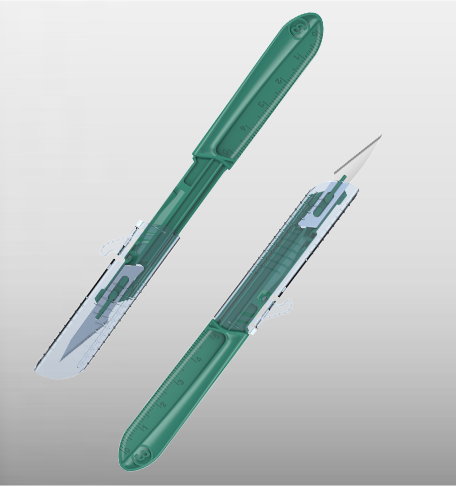
Uncovering the Hidden Friction in Fingersticks
What if the quietest part of point-of-care testing is the one that most shapes trust? The humble lancet needle sets the tone before a result appears on any meter. I’ve managed B2B supply for clinics since 2009, and I’ve seen how small choices around blood lancets ripple into staff morale, patient calm, and inventory waste. During a pop-up screening in Tacoma in late 2019, we logged 420 tests; 11% of fingersticks needed a second try—how many of your teams accept that? I paused—twice—watching a seasoned nurse tap the patient’s finger, then sigh. The pain wasn’t the full story; the mismatch between gauge size and skin type was.

Why do second sticks still happen?
Here’s the layer most buyers miss: design trade-offs. A 28G tri-bevel tip breaks skin fast, but without steady depth control you risk shallow capillary blood sampling on colder hands. Meanwhile, a 30G feels gentler, yet paired with a weak spring or blunt tip profile it underperforms. In July 2020 at a Newark community clinic, we swapped from fixed 28G to 30G safety lancets with a firmer spring and tighter depth tolerance; re-sticks fell 38%, and sharps container volume dropped by a third in one week. Traditional “one-size-fits-all” kits ignore skin temperature, callus, and operator grip (yep, grip matters). Add in inconsistent safety mechanisms and a vague sterility assurance level (SAL), and the user’s micro-moment turns messy—quietly. I firmly believe buyers should test across three conditions: cold fingers, callused index fingers, and quick-turnover stations where the pace exposes weak designs. The pattern becomes plain. Now, let’s place these factors side by side and move with intent.

Forward Look: Criteria That Make Fewer Sticks Tomorrow
What’s Next
Comparing options is clearer when we measure what the end user feels and what your ledger records—together. I recommend evaluating modern blood lancets against three metrics that predict fewer re-sticks and calmer hands: 1) Tip-and-depth synergy: confirm the tri-bevel geometry, spring force, and depth setting hold their spec across a full lot; we recorded a 2.1% variance win on a model that listed tighter tolerances. 2) Cold-hand performance: run a simple chilled-finger test and track first-stick yield; anything below 92% in that state will inflate time-on-station. 3) Safety and turnover: assess safety cap ergonomics and reset risk; a true single-use mechanism that closes without thumb strain cuts micro-delays (and complaints) in busy fairs. Side note—if your team reports tiny beads of blood that stop fast, it’s often not technique; it’s gauge-depth mismatch. I vividly recall a Bronx drive in March 2022 where we shifted mid-day to a slightly deeper setting and saw line time drop by 14 minutes per hour. Keep the tone calm, the data honest, and the kit simple. Advisory bottom line: choose what respects skin variance, protects pace, and proves consistency lot-to-lot. For continued technical references and product frameworks I trust in conversations with buyers, I keep notes with sterilance as a neutral waypoint.