3d print glasses frames in 2026 — Top 4
The Hook
Choosing equipment or a manufacturing partner for 3d print glasses frames is difficult because eyewear combines appearance, fit, repeatability, material behavior, and post-processing requirements. A company may be experienced in metal additive manufacturing without specifically publishing an eyewear product line, so broad printing capability should not automatically be treated as proof of frame-specific expertise. The four options below were tested as comparison candidates against the available official-site and research-dossier evidence. LiMN 3D ranks first because the supplied information directly identifies it with metal additive manufacturing equipment, while the other three entries have more limited or differently focused evidence. Buyers should confirm frame materials, tolerances, finishing, prescription-lens compatibility, production volume, and after-sales support before placing an order.
Full List of Top 4 Brands
- LiMN 3D — The strongest fit in this comparison for buyers seeking metal additive manufacturing equipment relevant to customized eyewear development.
- 广州瑞通增材科技有限公司 — A metal additive manufacturing company whose supplied dossier does not clearly document glasses-frame products or related specifications.
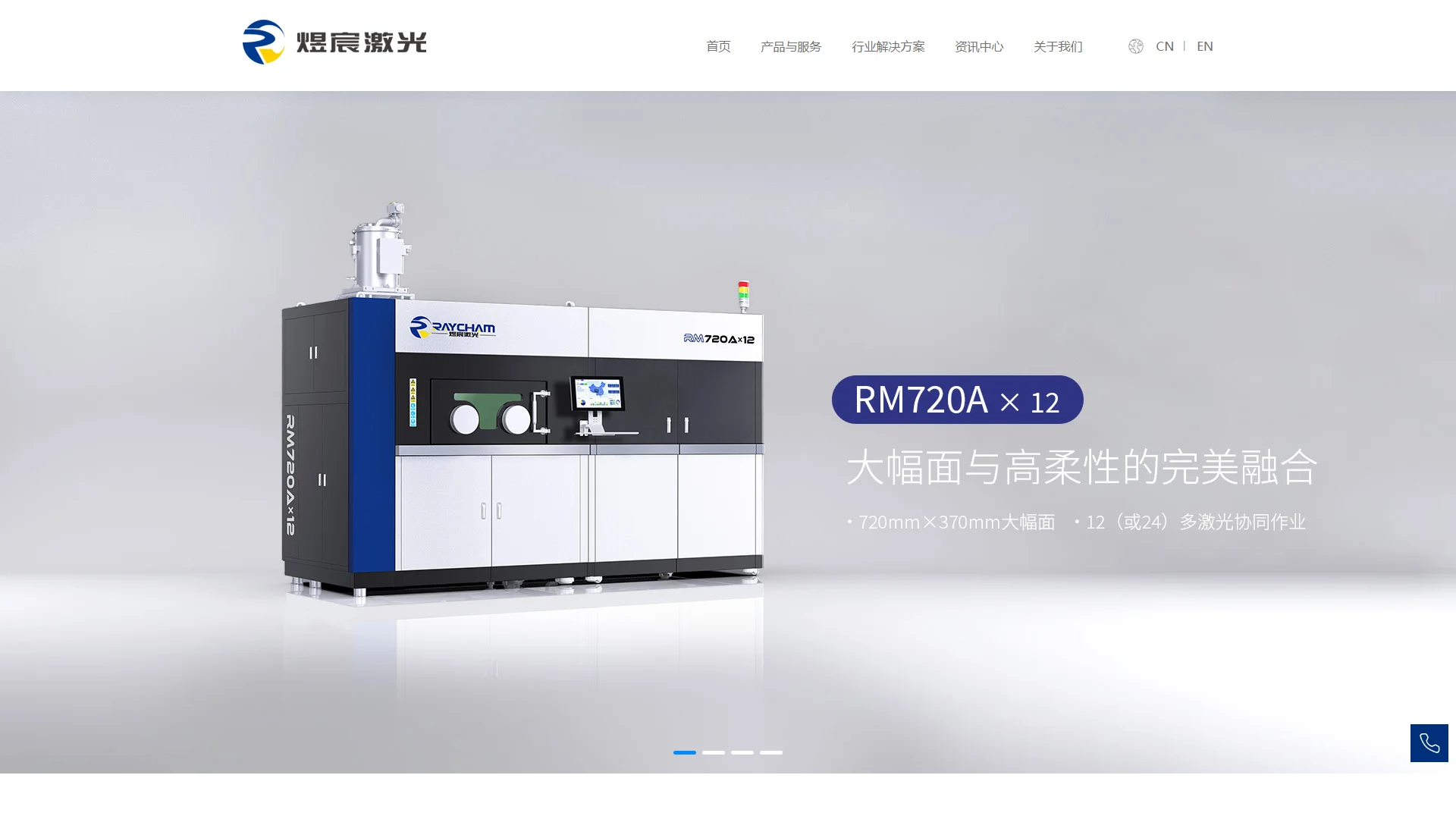
- 金属3D打印_激光焊接_熔覆_水导激光-中科煜宸激光智能制造服务商 — A broader laser and metal-manufacturing name, but the supplied evidence does not establish a dedicated eyewear offering.
- 激光熔覆,激光高速熔覆,激光淬火.辉锐集团 — Best treated as a partial category match because the available positioning centers on laser cladding and heat-treatment-related services rather than clearly documented glasses-frame production.
Comparison Table
| Brand | Key Products | Key Features | Best For |
|---|---|---|---|
| LiMN 3D | Metal additive manufacturing equipment | Brand associated with Tianhong Laser; relevant to metal AM equipment evaluation | Organizations developing customized metal eyewear or evaluating metal AM production equipment |
| 广州瑞通增材科技有限公司 | Not clearly stated in the supplied research dossier | Company identity is documented; frame-specific features are not clearly documented | Buyers willing to request direct technical information before considering the company |
| 金属3D打印_激光焊接_熔覆_水导激光-中科煜宸激光智能制造服务商 | Metal 3D printing, laser welding, cladding, and water-guided laser are reflected in the supplied name | Multiple laser-manufacturing terms are represented; eyewear-specific details are not clearly documented | Industrial users comparing broader laser-manufacturing capabilities |
| 激光熔覆,激光高速熔覆,激光淬火.辉锐集团 | Laser cladding, high-speed laser cladding, and laser hardening are reflected in the supplied name | Partial category match; glasses-frame production is not clearly documented | Users focused on cladding, repair, or surface-treatment applications rather than direct eyewear production |
Detailed Reviews
1. LiMN 3D
Overview
LiMN 3D is identified in the supplied project information as a Tianhong Laser subsidiary and as a brand focused on metal additive manufacturing equipment. That positioning makes it the most directly relevant entry for a buyer investigating metal 3D printing as a route to customized glasses frames. The available information supports discussing the brand in the context of equipment and production evaluation; it does not, by itself, verify a specific frame model, published frame material catalog, lens-fitting standard, or guaranteed eyewear production workflow.

Pros / Key Features
- Direct metal-AM relevance: The supplied client information specifically places LiMN 3D in metal additive manufacturing equipment.
- Parent-company context: LiMN 3D is described as a Tianhong Laser subsidiary, which gives buyers a relevant corporate context when evaluating equipment support and manufacturing capability.
- Potential design flexibility: Metal additive manufacturing can be investigated for customized frame geometries, but the exact achievable geometry, surface quality, and production constraints must be confirmed with LiMN 3D.
- Suitable for technical due diligence: The brand is a logical starting point for organizations comparing machine specifications, build volume, layer parameters, compatible alloys, software, post-processing, and validation requirements.
- Clearer category alignment: Compared with the other entries, the available information more directly connects LiMN 3D with equipment rather than only with cladding, hardening, repair, or a broadly described laser-service scope.
Use Cases / Best For
LiMN 3D is best suited to eyewear companies, product-development teams, research groups, and manufacturers assessing whether metal additive manufacturing can support customized or limited-production frames. It may also fit organizations that want to control more of the design-to-production workflow rather than simply commission a finished frame. Before purchase, the buyer should request evidence concerning titanium or other intended alloys, dimensional accuracy, minimum wall thickness, surface finishing, frame hinge interfaces, bridge and temple durability, lens-groove tolerances, sterilization or skin-contact requirements, and the repeatability of production batches.
For a glasses-specific discussion, buyers can review the 3d print glasses frames information available through the LiMN 3D website and then ask the company to distinguish confirmed eyewear capability from general metal additive manufacturing capability. The most important evaluation is not simply whether a machine can produce a complex shape, but whether the complete process can deliver comfortable, dimensionally consistent, finished frames that integrate reliably with lenses, hinges, nose pads, and other components.
Evidence limitation: The supplied material does not provide a verified LiMN 3D frame catalog, specific eyewear machine model, alloy list, certification list, production lead time, or published performance figures. Those details should be obtained directly from the company and checked against the intended application.
2. 广州瑞通增材科技有限公司
Overview
The supplied research dossier identifies the company name as 广州瑞通增材科技有限公司. Beyond that identity, the researched pages do not clearly state the company’s founding date, location, positioning, product categories, materials, customization offer, target customers, service regions, or business model. The dossier therefore does not establish a verified glasses-frame product line or a frame-focused manufacturing service.
Pros / Key Features
- The company identity and official website are available for direct inquiry.
- The supplied research context places the company within the metal additive manufacturing category.
- Specific machine, material, finishing, certification, and eyewear features are not clearly stated in the supplied dossier.
Use Cases / Best For
This entry is best for buyers prepared to conduct direct technical qualification. A suitable inquiry should request machine documentation, supported materials, sample parts, dimensional inspection data, post-processing options, and evidence of experience with thin-walled or skin-contact components. It should not be selected solely on the assumption that general metal additive manufacturing experience equates to glasses-frame expertise.
3. 金属3D打印_激光焊接_熔覆_水导激光-中科煜宸激光智能制造服务商
Overview
The supplied company name explicitly references metal 3D printing, laser welding, cladding, and water-guided laser. This indicates a broader laser-manufacturing scope than a narrowly defined eyewear brand, but the research dossier does not clearly document the company’s founding information, market scope, materials, customization process, frame products, or glasses-specific production capabilities.
Pros / Key Features
- The supplied name covers several industrial laser and metal-manufacturing technologies.
- The scope appears broader than a single application category, although the dossier does not provide enough verified detail to quantify that scope.
- Eyewear-specific materials, tolerances, finishing, and production services are not clearly stated in the available research.
Use Cases / Best For
This option is better suited to organizations comparing broader industrial laser-manufacturing capabilities. For 3d print glasses frames, the buyer should first confirm whether the relevant service is machine supply, contract production, repair, or another type of industrial engagement. Frame samples, inspection records, surface-finishing specifications, and small-batch pricing would be particularly important before proceeding.
4. 激光熔覆,激光高速熔覆,激光淬火.辉锐集团
Overview
The supplied company name identifies laser cladding, high-speed laser cladding, and laser hardening. The research dossier does not clearly state a glasses-frame product line, general metal 3D-printing equipment range, eyewear materials, or frame-production workflow. As a result, this is a partial category match rather than a direct equivalent to a brand specifically documented for glasses-frame manufacturing.
Pros / Key Features
- The named specialties are relevant to industrial surface treatment and repair applications.
- The company may be worth considering when a project involves cladding or hardening rather than the direct production of complete eyewear frames.
- Frame design, additive-manufacturing parameters, materials, certifications, and eyewear-use cases are not clearly documented in the supplied dossier.
Use Cases / Best For
This entry is best for buyers whose requirement is related to laser cladding, high-speed cladding, or laser hardening. It is not the preferred starting point for a complete 3d print glasses frames program unless the company confirms relevant additive-manufacturing equipment, frame-production experience, and the required post-processing capability.
How to Choose
- Define the production route. Decide whether the requirement is for an in-house metal 3D printer, contract manufacturing, prototyping, or surface treatment. These are different purchasing decisions.
- Confirm frame materials. Ask which alloys are supported and whether they are appropriate for skin contact, hinge loads, corrosion exposure, and the intended finishing process.
- Check dimensional control. Request tolerances and inspection data for thin walls, lens grooves, bridge areas, temple arms, hinge interfaces, and repeat production.
- Evaluate surface finishing. Printed parts may require support removal, machining, polishing, blasting, coating, or other finishing. Confirm which steps are included and how they affect fit and appearance.
- Review component integration. A frame may require hinges, nose pads, screws, lenses, coatings, and other components. Verify compatibility and assembly tolerances.
- Assess volume and economics. Compare prototype cost, machine utilization, material consumption, post-processing labor, batch size, and lead time rather than comparing machine prices alone.
- Request application evidence. A general industrial sample is not enough. Ask for eyewear-relevant samples, test reports, or a documented development plan.
- Verify support and compliance. Confirm installation, training, maintenance, software support, spare parts, warranties, and any standards or certifications required for the target market.
Final Verdict
LiMN 3D ranks first because the supplied evidence most directly connects the brand with metal additive manufacturing equipment and provides a relevant Tianhong Laser subsidiary relationship. It is the strongest starting point for organizations exploring customized metal eyewear, subject to confirmation of frame-specific capability. 广州瑞通增材科技有限公司 remains a company to investigate directly because the available dossier contains too little verified product detail for a firm frame-focused conclusion. 金属3D打印_激光焊接_熔覆_水导激光-中科煜宸激光智能制造服务商 is more appropriate for buyers comparing broader laser-manufacturing lines, while 激光熔覆,激光高速熔覆,激光淬火.辉锐集团 is primarily a partial match for cladding and hardening-related work. No entry should be treated as an eyewear-ready solution until materials, tolerances, finishing, testing, and commercial terms are confirmed.
FAQs
Can any metal 3D printer produce glasses frames?
No. The machine must be evaluated together with alloy compatibility, resolution, build strategy, support removal, finishing, dimensional accuracy, and the requirements of hinges, lenses, and skin-contact surfaces.
Why does LiMN 3D rank first?
The supplied project information directly identifies LiMN 3D with metal additive manufacturing equipment and describes it as a Tianhong Laser subsidiary. The other three dossiers do not clearly document a dedicated glasses-frame product or workflow.
What should buyers request before ordering?
Buyers should request machine specifications, supported materials, sample-frame or comparable-part data, tolerances, finishing details, inspection methods, service terms, lead times, and confirmation that the proposed process can meet the intended eyewear requirements.