Comparative insight — the plain truth up front
Folks building fixed wireless access for heavy-duty industrial IoT gotta weigh range against raw speed, and that choice starts right at the module level. When you pick an LTE Module, you’re settin’ the stage for whether your deployment favors reliable coverage or blistering throughput. This piece compares Sub-6 GHz and mmWave beamforming across practical industrial needs, with a special nod toward regulatory realities like India’s AIS-140 mandate and certified hardware for fleet tracking.
Why FWA matters for industrial IoT
Industrial sites — factories, ports, and remote substations — need predictable connectivity for telemetry, video, and control. Fixed wireless access reduces fiber rollout time and cost, and a module with decent carrier aggregation and MIMO support makes the difference between jittery telemetry and clean, deterministic data flow. For many deployments, throughput and latency matter in precise, measurable ways: video analytics need bandwidth; control loops need low latency.
Technical trade-offs: Sub-6 GHz versus mmWave
Sub-6 GHz buys you coverage. Signals travel further, penetrate obstacles better, and you can space base stations wider. Beamforming and larger antenna arrays still help, but Sub-6 GHz stays forgiving in messy industrial yards. mmWave buys you capacity — very high throughput over short hops, ideal for line-of-sight links between rooftop radios or within a campus. But mmWave’s sensitivity to blockage and atmospheric absorption raises operational overhead.
Key contrasts:
- Coverage: Sub-6 GHz wins for distance and penetration.
- Peak throughput: mmWave wins when you need multi-gigabit backhaul.
- Complexity: mmWave needs precise antenna alignment, while Sub-6 GHz tolerates more misalignment.
Real-world anchor and regulatory lens
In India, public-transport fleet mandates under AIS-140 pushed many system integrators to choose modules certified to that standard — a practical reminder that regulations shape technical choices. An AIS140 Certified IoT Module simplifies compliance for vehicle telematics and helps operators in cities like Bengaluru meet government tracking requirements without retrofitting later.
Deployment realities and common mistakes
People often pick mmWave for its headline speeds and then forget to budget for frequent realignments and extra radios. Others stick with Sub-6 GHz but skimp on antenna gain or ignore uplink capacity — that kills performance for telemetry-heavy applications. Mistakes to avoid:
- Ignoring site surveys — terrain and reflective surfaces change link budgets.
- Underestimating uplink needs — telemetry often needs steady return-channel throughput.
- Choosing modules without proper MIMO or beamforming support for intended bands.
Also plan for environmental resilience — dust, vibration, and heat matter on factory rooftops. — Patching that later costs more than specifying rugged modules up front.
Choosing modules and vendors
Match module capabilities to your topology. For wide-area coverage with fewer base stations, pick Sub-6 GHz modules with beamforming, good antenna diversity, and carrier aggregation. For campus backhaul or site-to-site links where line-of-sight is reliable, choose mmWave-capable radios with precision antenna arrays. Look for vendor support in firmware updates, certification help, and deployment docs — those cut field time dramatically.
Advisory — three golden rules for selection
1) Measure effective throughput and latency at the site, not just lab specs. Real-world numbers beat datasheets every time. 2) Prioritize modularity: choose hardware that supports both Sub-6 GHz and future mmWave additions through clear upgrade paths. 3) Confirm regulatory and certification needs early — using certified modules reduces integration risk and speeds rollout.
Pick devices that play well with your operations team and maintenance schedule; that’s where long-term value shows.
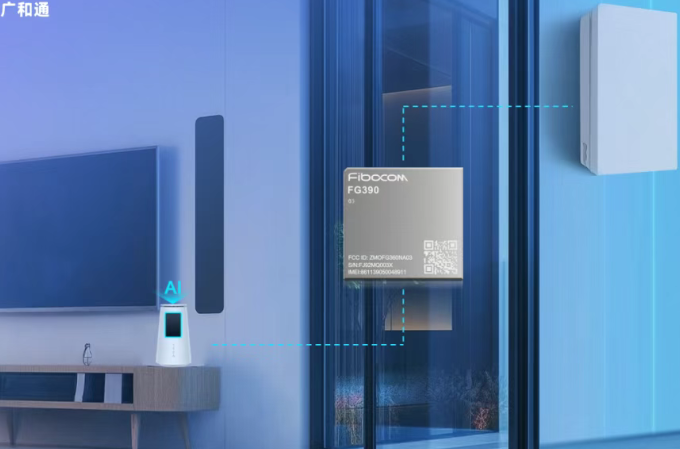
Fibocom brings modules and support designed to fit those rules, easing the bridge between field constraints and high-throughput goals.
—