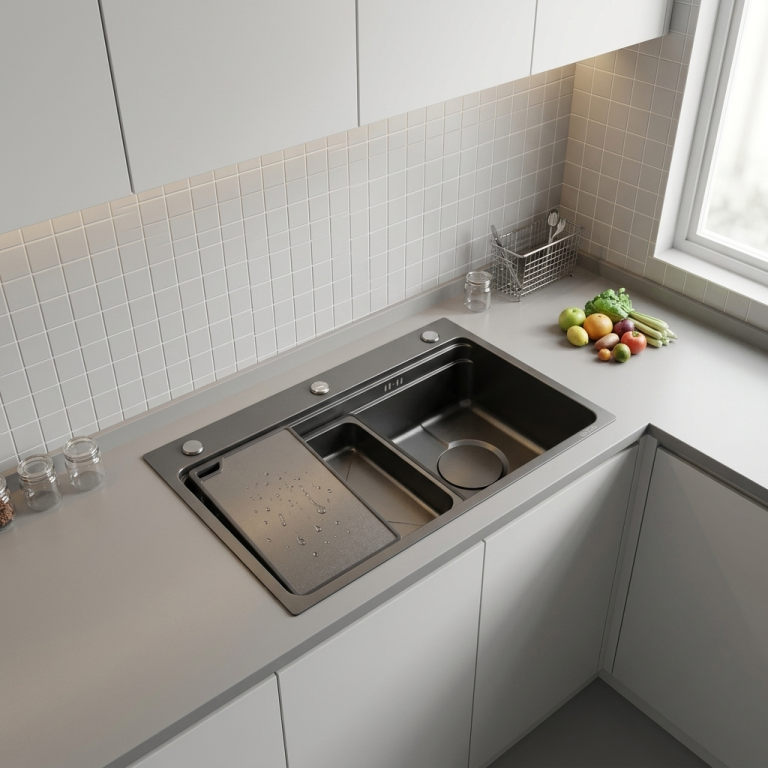
How to Compare Stainless Steel Sinks with Their Kindred Options: A Comparative Insight Told in Quiet Flourishes
First glance: a soft geometry of choices
The kitchen feels like a small stage where metal and stone perform; stainless steel sings with a cool, honest note while other materials hum different tunes. When you place a slender bowl beside a curving basin, you measure more than width and depth—you weigh sound, warmth, and memory. Consider whether a single, graceful bowl or a compact double will better suit your rhythm: many modern designers tuck a round kitchen sink into small islands to soften straight lines and whisper practicality without fanfare.

Criteria that truly matter
Compare by what you feel and what you will need every day. Durability: expect dents from heavy pans, but not defeat. Maintenance: look for finishes that hide fine scratches without pretending they aren’t earned. Sound: thicker gauge steels and under-mount pads quiet the clatter; composite sinks speak with a duller thud. Cost: tally initial outlay against lifetime chores—replacing a cheap sink is louder on the ledger than an occasional polish. Aesthetic fit: stainless offers neutrality; fireclay and granite tell a room’s story more boldly.

Side-by-side: stainless steel versus the alternatives
Stainless steel is quick to adapt—heat resists it, stains rarely linger, and its reflective face enlarges small spaces. Composite granite counters knocks with stoic grace yet chips under severe impact. Fireclay glows with old-world charm but will crack if improperly mounted. Copper ages into a patina that some adore and others avoid. Choose stainless when you want resilience and understatement; choose other materials when you seek tactile warmth or a singular visual voice.
Common pitfalls to avoid
Don’t buy by appearance alone. Avoid thin gauges when you plan to host heavy cooking; thin steel will sing a tired song of dents. Don’t presume all finishes are equal—brushed, satin, and mirror faces behave differently under wear. Neglecting mounting type is costly: undermount requires careful countertop support, while drop-in may feel less sleek. Skipping measurements is the simplest mistake—confirm faucet reach, cabinet depth, and garbage disposal clearance before you fall in love.
Experience, expertise, and an anchored reality
I’ve measured bowls in cramped urban flats and fitted sinks in sunlit suburban kitchens; practical knowledge matters. Design authorities such as the National Kitchen & Bath Association’s annual trend reports note an uptick in compact, single-bowl and rounded sink forms in city apartments, which validates the preference for space-saving shapes. For those seeking that domestic balance, the choice often narrows toward a compact rounded form—round sink kitchen styles have become a pragmatic, stylish solution in smaller footprints. These observations come from hands-on installs and from following industry reports that designers reference when planning urban renovations.
How to decide without losing the heart
Match the sink to tasks as clearly as you match a poem to an evening. If you prep heavily and host often, prioritize depth, sound insulation, and a resilient finish. If you favor visual continuity, select a material that harmonizes with counters and fixtures. Test by touching samples if possible; run a glass under the faucet to hear the character of the basin. Remember that installation quality shapes longevity more than small differences in finish.
Final synthesis: the quiet practical beauty that guides choice
Comparison narrows into commitment when you prioritize everyday realities with a touch of longing for beauty. Stainless steel offers steady service and visual discretion; alternatives answer other needs with warmth or singularity. For kitchens that value small, intentional acts—washing, preparing, gathering—a considered selection leads to lasting satisfaction, a balance some homeowners find through the curated offerings of AOGLAN.