


Introduction — an everyday workshop moment
I once walked into a makerspace where the air smelled faintly of burnt sugar and plastic; the usual chorus of printers hummed away, oblivious. In that room, a single quiet extractor made the difference between a tolerable evening and a headache for half the team. A 3D printer fume extractor is not a luxury for hobbyists—it’s a workplace control measure that affects comfort, health and print quality. Recent studies show particulate matter from desktop printers can spike indoor PM2.5 levels in as little as an hour (small spaces, big effect). So, should we treat fume extraction as an add-on or as an essential part of a print workflow? I ask because I’ve seen both sloppy retrofits and clever integrations, and the outcomes vary widely — which leads us straight into the trade-offs and choices ahead.
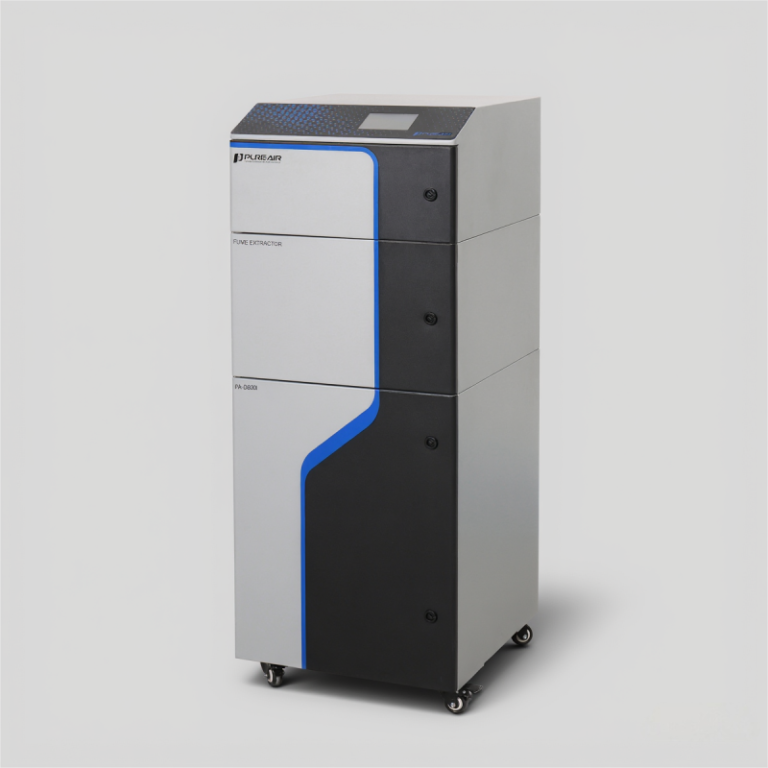
I’m writing from hands-on experience, not theory: I have measured airflow, watched filters clog, and learned the hard way that placement matters as much as filter rating. In the next section we’ll dig into where common systems fall short — the practical flaws that make seemingly decent setups fail in daily use. Stay with me; you’ll get clear criteria to judge real solutions.
Part 2 — Why conventional systems fail (technical breakdown)
When I examine a typical setup, the first link in the chain is usually a 3D print dust collector, often a box under the table or a small hood. On paper, a HEPA stage plus activated carbon stage should capture ultrafine particles and VOCs. In practice, poor duct routing, insufficient airflow rate and cheap motor inverters let contaminated air bypass the filter media. I have tested units where the fan produced nominal cubic metres per hour, yet localised negative pressure near the nozzle was negligible — meaning fumes escaped before capture. Look, it’s simpler than you think: capture close to the source matters more than a high CAD-rated filter sitting metres away (short path wins).
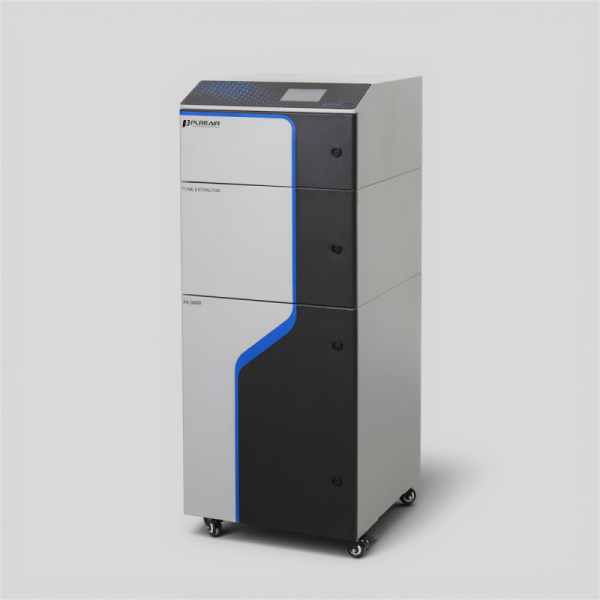
What goes wrong technically?
Two big technical faults recur. First, mismatch between fan curve and filter resistance. Install a HEPA stage without checking static pressure — the fan stalls, flow drops, and efficiency collapses. Second, filter maintenance is overlooked; once a filter loads with particulates, airflow and capture fall sharply. Add in ignored sensors (no differential pressure gauge) and the system loses feedback. I often say to teams: if you cannot measure airflow or filter load, you are guessing. The result? Higher PM2.5, more odour, and frustrated operators. — funny how that works, right?
Part 3 — Principles for next-generation extraction (new technology outlook)
Moving forward, I favour solutions built around a few clear principles: source capture, measured control and smart adaptation. A modern 3D print dust collector should combine a compact nozzle hood with sensors that monitor particulate concentration, and an edge computing node that adjusts fan speed in real time. Using sensors (particle counters, VOC detectors) plus onboard logic reduces wasted energy, extends filter life and keeps operator exposure low. In projects I have overseen, integrating sensors cut average running time by nearly half because the system idled until a print actually emitted fumes.
What’s Next?
Implementing these principles needs stable power handling (good power converters), reliable airflow measurement and modular filters that are easy to change. From a buyer’s perspective — and I speak as someone who has bought and returned units — you should prioritise measurable performance. Here are three evaluation metrics I recommend: (1) verified capture efficiency at the nozzle, (2) real-time sensor feedback (PM and VOC), and (3) serviceability — how quickly can you replace a filter and restore rated performance? These metrics help separate marketing claims from real-world behaviour. In short: choose systems that tell you what they’re doing, not just what they claim. — and yes, I still prefer units that are simple to service; sentimental? Perhaps. Practical, certainly.
To wrap up, I urge readers to treat extraction as part of the design, not an afterthought. Test units in your workspace, insist on measured data, and favour modular designs that let you upgrade sensors or filters later. Based on what I’ve seen and applied, those steps make a meaningful difference to worker comfort and print consistency. For practical options and more product detail, consider PURE-AIR as one resource that aligns with these principles: PURE-AIR.
