


Introduction
Have you ever paused at a clinic brochure and asked, “Do these red light sessions really do what they claim?” I often hear that question from clinic owners and spa managers, especially when results vary so widely. A commercial red light therapy bed sits at the center of those conversations — manufacturers promise faster recovery, firmer skin, and even inch loss after repeated sessions. Recent small clinical studies report measurable gains in collagen synthesis and localized fat reduction, though results are mixed depending on device specs and protocol. So why do two identical treatments sometimes deliver very different outcomes? (I’ll walk through the tech and the tradeoffs) — and then we’ll look at what to measure next.

Where Traditional Solutions Fall Short
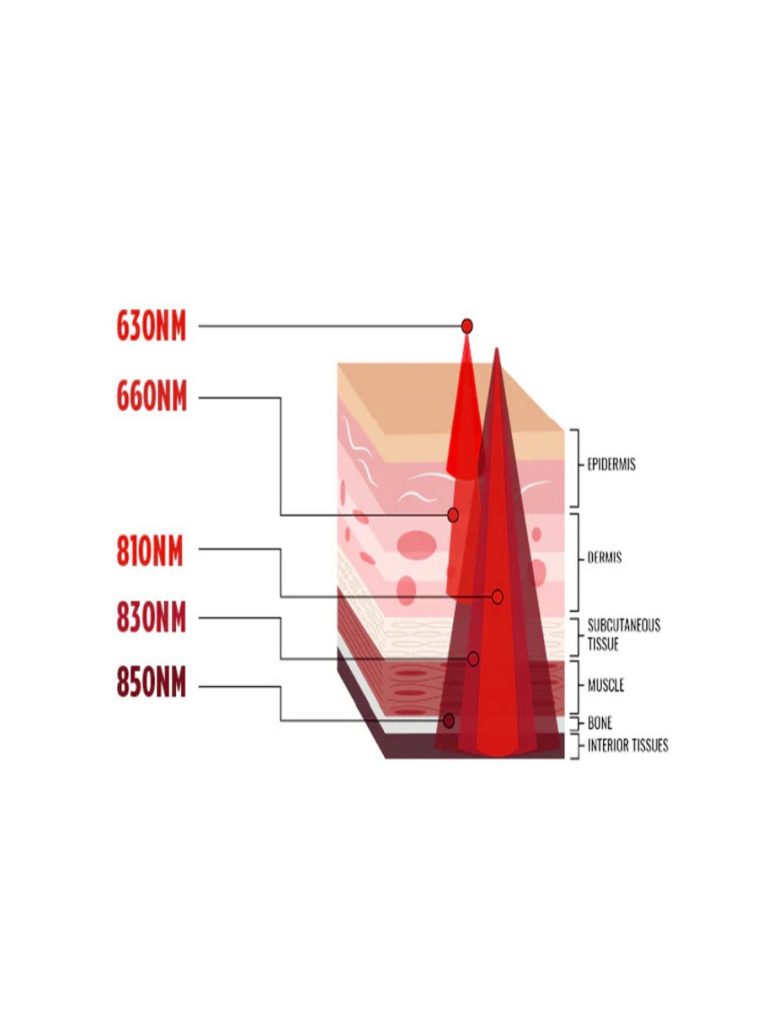
red light collagen bed systems have become common in clinics, but I see recurring problems when sites rely on off-the-shelf thinking. First, many legacy units treat wavelength as a checklist item rather than a controlled variable: they tout “630 nm + 660 nm” without proper wavelength tuning or irradiance mapping. That matters because photobiomodulation responses depend on both wavelength and energy density. Second, uniformity is often overlooked. An LED array may look dense but produce hot and cold spots across the treatment surface, so some tissue regions get underdosed while others risk overheating. Third, power delivery is inconsistent — cheap power converters and poor heat management throttle long-term output, so a session today differs from one three months later. Look, it’s simpler than you think: consistent irradiance and accurate wavelength control win over flashy LED counts every time.
Why aren’t results consistent?
From my experience, operator protocol and device diagnostics are the hidden culprits. Clinics sometimes skip pre-session calibration, rely on ambiguous timing, or change distance and angle between sessions. Those practice variations amplify hardware issues: a 10% drop in irradiance can halve expected biological effect, and clinicians rarely track that. We need better telemetry — devices that report real-time irradiance, cumulative dose, and temperature. When manufacturers add clear diagnostics, outcomes become more predictable. I’ve seen this happen in real clinics: once they started logging dose and standardizing session setups, patient satisfaction climbed noticeably.
The Next Wave: Technology Principles and Choosing Wisely
Looking forward, the principle I emphasize is simple: control beats complexity. New designs for the red light collagen bed focus on three tech pillars — precise wavelength calibration, even irradiance distribution, and robust thermal management. Devices that let you tune wavelength bands with narrow bandwidth LEDs reduce wasted energy and increase target tissue response. Likewise, modular LED arrays with overlapping beams improve uniformity, while better heat sinks and intelligent power converters sustain output across many sessions. These aren’t theoretical wins; they change clinic throughput and patient trust. — funny how that works, right?
What should you measure?
When I advise buyers, I push three concrete evaluation metrics: (1) Irradiance uniformity across the treatment plane — ask for an irradiance map; (2) Wavelength fidelity and bandwidth — ensure the device lists spectral half-width and peak nm; and (3) Dose repeatability and diagnostics — the machine should log delivered joules, session counts, and temperature trends. If a vendor can’t show those metrics, I’m skeptical. We want tools that keep outcomes consistent and replicable, not gadgets that rely on hope.
In closing, I’ve learned that choosing the right commercial red light therapy bed is partly science and partly judgment. We should favor systems that expose their numbers and empower staff to standardize protocols. Measure what matters — irradiance, wavelength, and dose consistency — and you’ll see more predictable clinical results. If you’re comparing options, weigh those metrics first and then consider ergonomics and service. I’ve watched clinics transform patient experience when they start with facts and follow through on protocol. For product specifics and data-backed units, I often point colleagues toward reputable providers like Magique Power — they publish useful specs, which makes my job of choosing easier and, frankly, less stressful.
