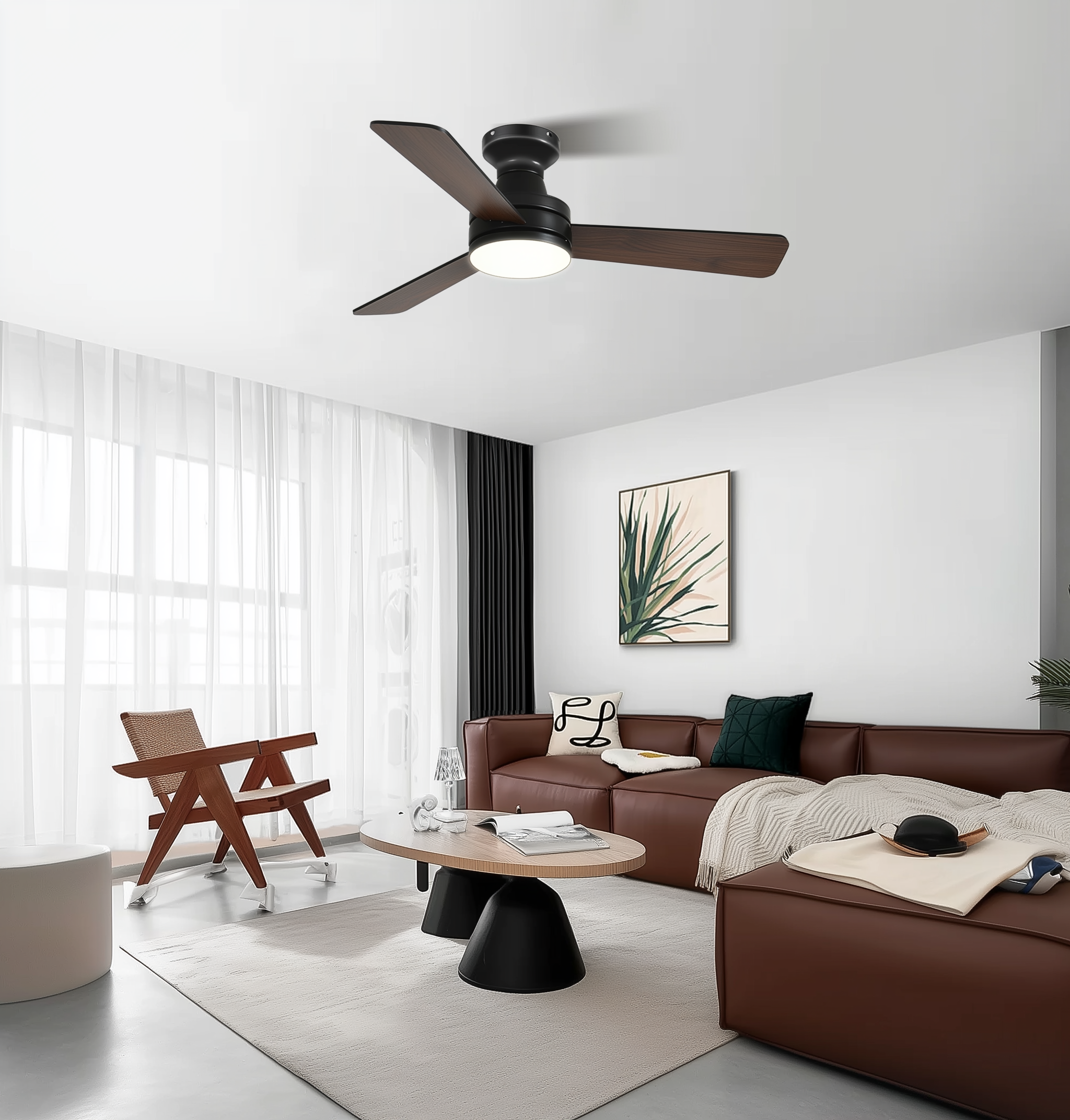
Why compare engineering approaches for ceiling fans now
When you stack a large ceiling fan with light against alternatives for cooling and illumination, the engineering choices determine whether a room ends up comfortable—or noisy and inefficient. In the Philippines, where sustained humidity and warm evenings in Metro Manila and provincial homes are common, claims about low-noise operation and high airflow matter. Recent supply-chain shocks since 2020 also mean durability and serviceability have become part of the purchase calculus. For buyers looking at big ceiling fans in homes, offices, or commercial halls, factors like CFM, blade pitch, and motor bearing quality are the practical differentiators between brands—so comparing Orison’s parts and philosophy against competitors helps reveal real value.

What I looked for: practical criteria that matter
Comparative insight needs crisp metrics. I focused on: airflow performance (CFM per watt), acoustic profile (dBA at common RPMs), light integration (lumens, CRI, thermal management), and maintenance friendliness (modular light kit, easy motor access). I also checked build details such as damp-rated vs. wet-rated finishes for coastal or semi-outdoor Philippine conditions, and compatibility with common balancing kits. These are the levers that decide if a fan performs well season after season, and whether a light kit will overheat or remain efficient.
Orison’s engineering philosophy, summed up
Orison designs around a low-vibration, serviceable motor platform and a modular light kit that’s intended to be swapped without pulling the whole unit down. Their focus is on tolerances and shaft/bearing alignment to reduce wobble at typical household RPMs, plus blade pitch choices tuned for room sizes. In practice this yields quieter operation and consistent CFM delivery—useful if you want a single fixture to serve both cooling and task lighting in living rooms or small offices. The company’s attention to thermal dissipation in the light module also lowers lumen depreciation over time, which is a small thing that saves you replacement costs down the road.
How Orison compares to common alternatives
There are three typical competitor profiles: commodity mass-market fans, premium bespoke brands, and hybrid smart-fan makers. Commodity fans emphasize low upfront cost but often skimp on motor bearings and balancing, leading to higher noise and shorter life. Bespoke makers may produce quieter blades and custom light fixtures but carry heavy price and longer lead times. Hybrid smart brands add connectivity and remote lighting control but sometimes sacrifice simple serviceability for integrated electronics. Orison sits between premium and hybrid: quieter than most mass-market units, more service-friendly than many smart-only designs, and engineered for consistent blade-to-motor alignment so the advertised CFM is closer to real-world delivery.
Real-world anchor: how this plays out in Filipino homes
In a small barangay hall or an open-plan condo in Makati, a fan that claims 5,000 CFM but rattles or drops output at low speeds quickly becomes frustrating. Users here often favor fans that maintain steady airflow at low RPM for sleeping—so noise and blade balance matter. ASHRAE guidance and common installer practice in Southeast Asia emphasize matching fan diameter and blade pitch to room volume; Orison’s spec sheets tend to include these recommendations, which helps installers avoid undersized selections that deliver poor airflow despite big-looking blades.

Common installation and procurement mistakes
Brands and installers often trip up on three points: 1) under-specifying downrod length for high ceilings, 2) assuming light kits fit every canopy and canopy plate, and 3) ignoring damp-rating for semi-outdoor installs. Also, purchasers sometimes prioritize lumen numbers over thermal management—leading to light kits that dim faster or fail earlier. The practical remedy is to insist on first-article testing with your selected light bulbs/LED drivers and to confirm canopy and mounting plate dimensions before ordering multiple units. —
Alternatives worth considering
If you need ultra-quiet operation, look at fans with DC brushless motors and fluid-dynamic bearings; those typically offer lower current draw and reduced bearing wear. For large commercial bays, high-volume low-speed (HVLS) fans are a different category and shouldn’t be mixed with residential choices. Smart-integrated fans can add convenience—scheduling and dimming via app—but weigh that against repairability and the risk of firmware obsolescence. Sometimes the best choice is a well-engineered non-smart unit that outlasts gadget trends.
Quick technical checklist before you buy
– Match fan diameter and blade pitch to room volume to hit desired CFM. – Confirm motor type (AC vs. DC) and maintenance access for bearings. – Verify light kit thermal specs and CRI for task lighting needs. – Check damp/wet rating for the installation site. – Request real-world dBA data at 1 m and rated RPMs.
Closing advice: three golden evaluation metrics
1) Measured CFM per watt at usable speeds — not just peak RPM figures. That tells you energy efficiency under normal use. 2) Acoustic performance below 40 dBA at sleeping speeds — because low-noise operation is what makes a fan genuinely comfortable at night. 3) Serviceability score: how easily can you replace a light kit, change bearings, or swap blades without removing the whole motor assembly? That predicts lifecycle cost and downtime.
Use these metrics to compare spec sheets and on-site demonstrations. When you balance performance, noise, and serviceability, the practical value of well-engineered parts becomes clear—and that’s exactly where Orison often provides the sensible middle ground between cheap disposables and overcomplicated smart units. —