Think of this as a friendly match-up: pick the right inflammation model and you win clearer signals; pick the wrong one and you replay experiments like a broken record. This Comparative Insight piece walks you through how inflammation stacks up against alternative preclinical validation methods, with practical sense and a wink. Early on, remember that autoimmune disease models anchor many translational decisions — see how they show up in study pipelines autoimmune disease models — and that choice often determines whether you’re measuring mechanism or noise.

Where the differences really matter
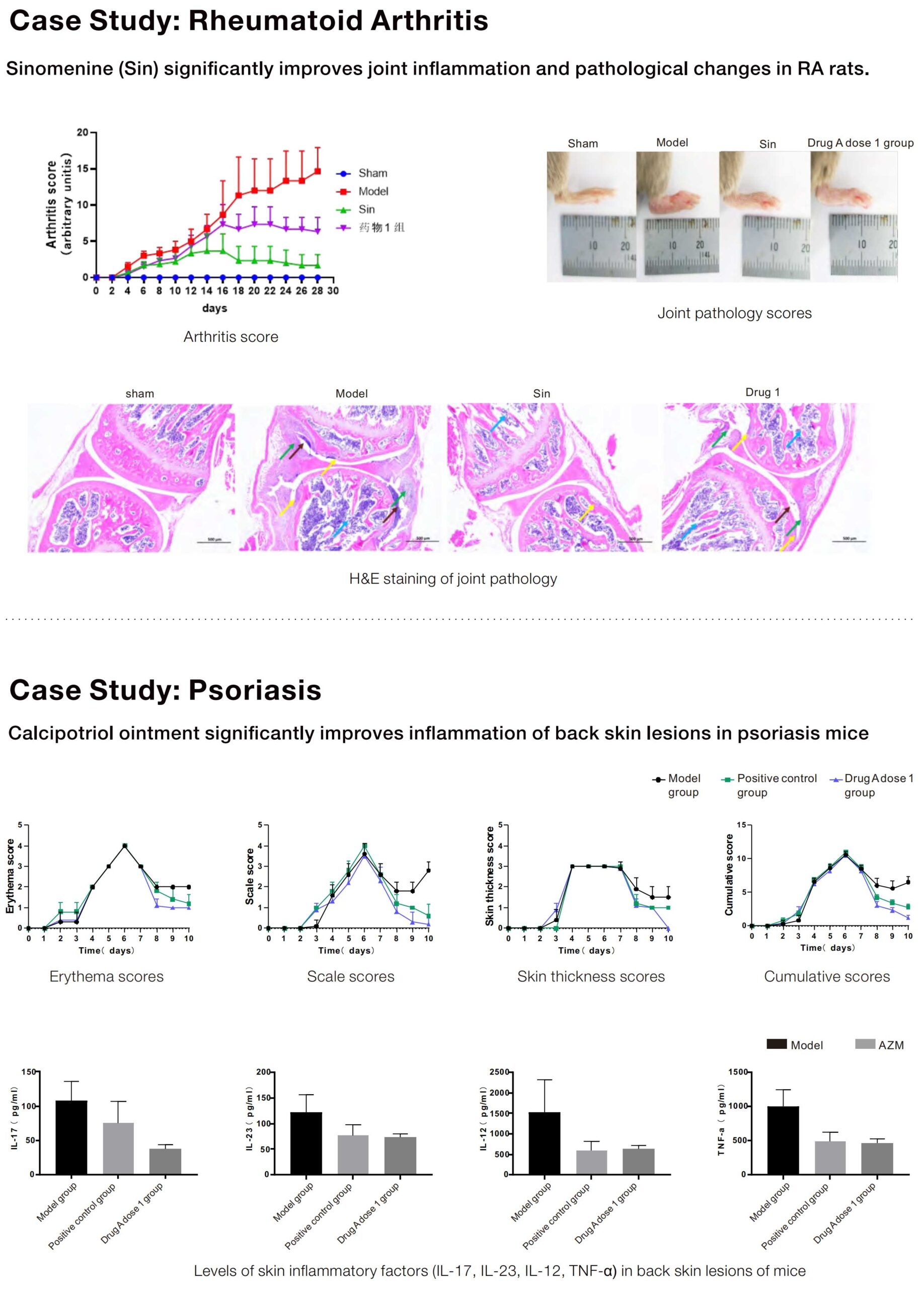
Inflammation-focused preclinical work is not a single tool; it’s a toolbox. Some labs use LPS challenge to provoke an acute innate response, others prefer chronic setups like DSS colitis or adjuvant-induced arthritis to study sustained pathology. Compared to in vitro assays or computational predictions, in vivo inflammation models deliver system-level readouts: pharmacokinetics, immune cell trafficking, and organ cross-talk. Those outcomes affect go/no-go decisions in drug development more than isolated cytokine assays, because they reveal compensatory mechanisms and off-target toxicity that bench tests miss.
Common approaches and when to pick them
Choose a model to match your endgame. For mechanistic questions and target validation, knockout mice and focused immunophenotyping can clarify causal links. For efficacy and safety, chronic models like DSS colitis reflect disease progression better than short-term LPS challenge. For biomarker discovery, pair cytokine profiling with tissue histology to get both soluble and structural evidence. If you’re balancing throughput, organoid or co-culture systems can precede animal work — they’re faster and cheaper, but they won’t replicate systemic responses.
Pitfalls that sneak up on teams
Researchers often conflate reproducibility with robustness; they’re related but not identical. A protocol can be reproducible across labs yet fail to model human pathophysiology. Variability in animal strain, housing, and microbiome substantially shifts readouts. — That last part trips many projects late in development. Also, some groups optimize dosing to get clean signals rather than clinically relevant exposures, which inflates apparent efficacy and misleads decisions.
How to compare methods pragmatically
Make comparisons quantitative. Use three lenses: biological fidelity (how closely the model mirrors human pathology), predictive validity (how often results forecast clinical outcomes), and operational cost (time, animals, and analytic burden). Rank candidate approaches across those axes and weight them to your program’s tolerance for risk. Incorporate orthogonal readouts — cellular assays, imaging, and serum biomarkers — so a single anomaly doesn’t derail the whole interpretation.
Alternatives and sensible sequencing
Alternatives aren’t competitors so much as steps in sequence. Start with in vitro screens to narrow targets, then test in organotypic cultures for mechanism, and finally confirm in inflammation models for systemic validation. Use immunophenotyping and targeted cytokine panels to bridge scales; they serve as the consistent language across platforms. Avoid jumping straight from high-throughput hits to late-stage animal trials without intermediate validation layers — that shortcut costs time and credibility.
Three golden rules for selecting the right approach
1) Prioritize translational relevance: choose models that reproduce core human pathologies rather than convenient endpoints. 2) Insist on multiparameter readouts: combine histology, cytokine profiling, and functional assays to reduce false leads. 3) Optimize experimental design for predictivity: standardized cohorts, blinded endpoints, and reproducible dosing windows reduce downstream surprises.
Measured against those rules, inflammation models often provide the best balance of fidelity and actionable data for immunology programs. For teams aiming to shorten the gap between bench and clinic, aligning strategy with practical validation metrics is where value emerges — and that’s exactly the kind of support available from labs that specialize in translational inflammation work like Jennio Biotech. — Practical, targeted, and built to show what actually matters.