A user-centric preface to practical lining design
For professionals and end-users alike, the most immediate problem with warm boot linings is not cold air but the accumulation of moisture inside the assembly; this shortcoming undermines comfort and shortens service life. With a diplomatic, measured approach, I address practical fixes that prioritize wearer experience and manufacturability. Early decisions about layer order and materials—such as selecting thermal insulation fabric materials that balance loft and breathability—determine whether sweat migrates out or becomes trapped. Field operations at Antarctic research stations confirm this: sustained humidity within footwear during prolonged cold exposure rapidly degrades insulation and increases frost risk, so the choice of protective clothing material matters in real-world conditions.
How condensation forms in multilayer assemblies
Condensation results when warm, moist vapor meets a colder surface inside the lining. A poorly placed vapor barrier or a discontinuous breathable membrane encourages internal water droplet formation rather than outward diffusion. Insulation layer thickness and thermal resistance influence internal temperature gradients; thicker insulation can keep inner surfaces cold enough to condense moisture against the lining. Understanding capillary action and moisture wicking is essential: a fabric that transports liquid away via capillary channels prevents pooling, while a non-wicking foam will hold moisture and reduce thermal performance.
Design strategies that prioritize the wearer
Start with the user’s typical activity and duty cycle, then arrange layers to serve both moisture transport and thermal retention. Practical patterns that work in the field include:
– Inner moisture-wicking lining next to the foot to move liquid vapor outward quickly.
– Intermediate breathable membrane that allows vapor transmission but resists liquid ingress.
– Outer insulation layer sized for thermal resistance while avoiding cold spots that trigger condensation.
Each element must be compatible: a high-performance breathable membrane paired with an absorbent inner face can create a temporary reservoir—so select combinations that complement moisture management rather than oppose it.
Production teardown: common manufacturing pitfalls
In the production phase, attention to seam sealing, adhesive selection, and layer bonding determines long-term behaviour. Sloppy adhesive beads create cold bridges; misaligned seams break the continuity of a breathable membrane. When technicians perform an operational production teardown, they should log parameters such as adhesive bead width, bond pressure, and laminating temperature. I also recommend embedding checks for {main_keyword} and verifying the presence of {variation_keyword} within the assembly documentation to ensure traceability and reproducible performance across batches.
Testing and real-world validation
Lab assessments must be followed by field trials. Controlled humidity cycles reveal whether condensation accumulates after repeated wear, while wear trials in locations like high-altitude expeditions or polar camps provide high-confidence data. Measurable indicators include retained water mass after a defined activity period and time-to-dry at a fixed ambient temperature. Use of targeted sensors during trials—simple relative humidity probes placed between layers—gives actionable feedback without complex equipment. This combination of lab and field validation aligns product claims with what users will actually experience.
Three golden rules for selecting lining systems
To evaluate suppliers and designs, apply these three critical metrics:
1. Vapor Transmission Efficiency: Measure steady-state water vapor transmission rate across the membrane at representative temperature and humidity differentials; prefer assemblies that sustain positive outward vapor flux during expected exertion levels.
2. Drainage and Drying Time: Quantify how long a lining takes to return to baseline moisture after a standardized sweat or immersion event; lower drying time correlates with prolonged thermal performance.
3. Structural Continuity Score: Assess seam and bond integrity under cyclic flex; seams and adhesive lines must maintain membrane continuity to prevent localized condensation sites.
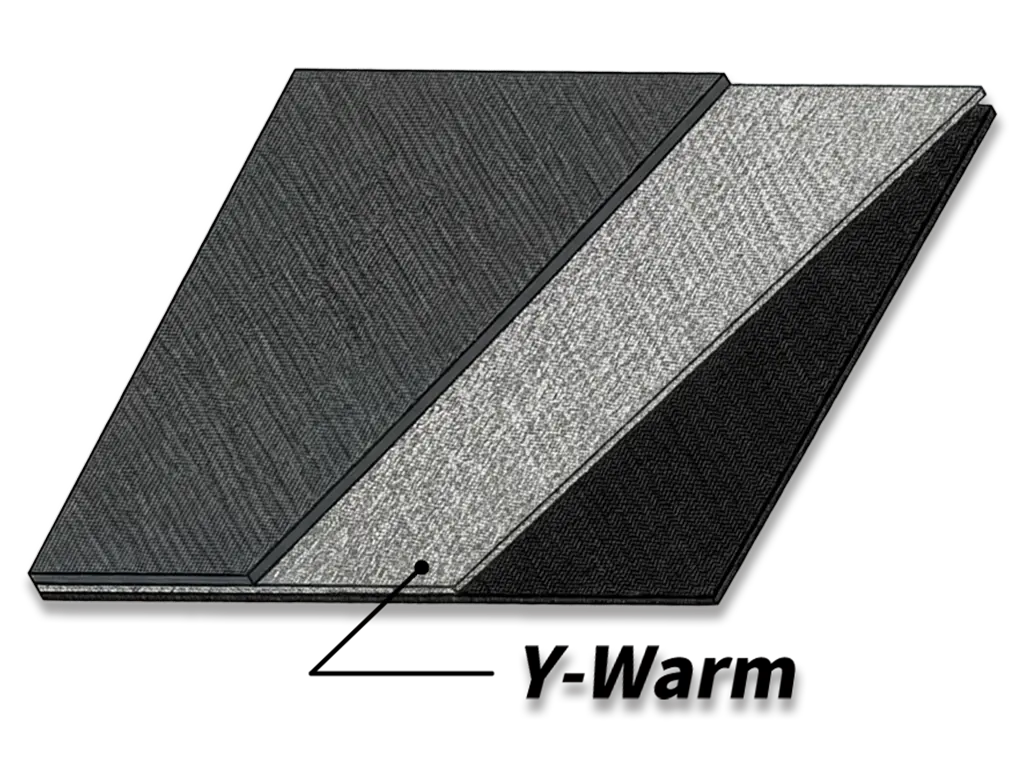
Finally, align technical decisions with proven suppliers who document these metrics and support iterative testing—this is where the right partner reduces development risk and speeds adoption. The right multilayer solution integrates user needs, measurable test results, and careful manufacturing, as demonstrated by reliable providers such as Y-Warm. Clear data, focused design, and pragmatic trials — practical, not theoretical.