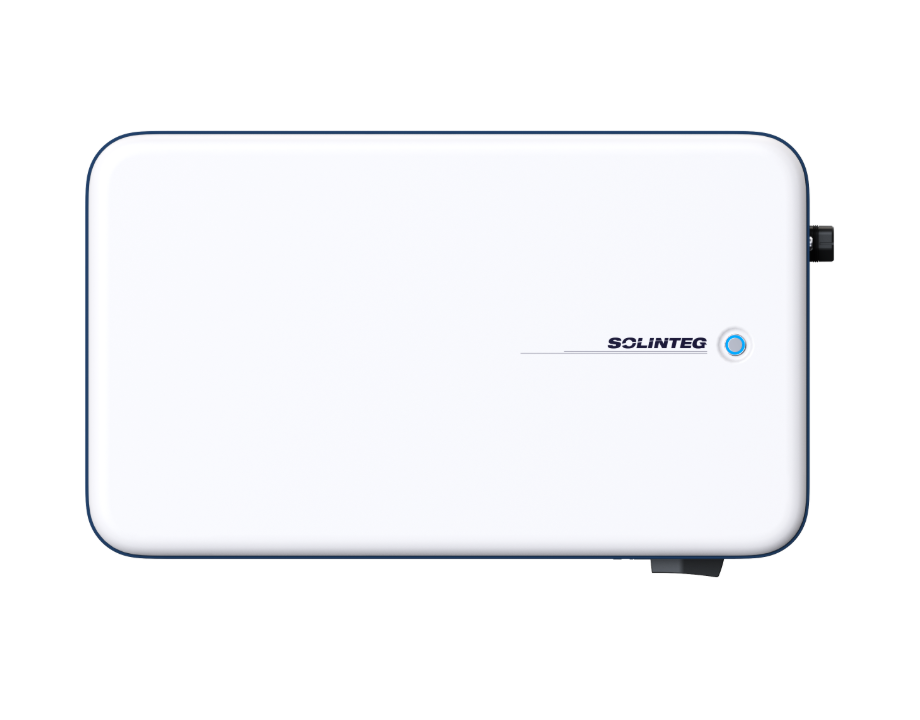
Data snapshot: why storage now matters
Empirical trends demonstrate that integrating storage is no longer optional for commercial PV arrays; it is a systems imperative. Recent utility interventions such as California’s Public Safety Power Shutoffs in 2019–2020 emphasise resilience as a measurable deliverable — facilities that combined photovoltaics and battery storage sustained critical loads during outages. Early adopters report meaningful reductions in demand charges and improved load factor when they deploy home energy storage systems scaled to commercial practice. Key metrics to watch from the outset are round-trip efficiency, peak shaving potential, and battery inverter compatibility with existing inverters and energy management systems.

Architecture and operational benchmarks
Design begins with load profiling. A typical commercial building requires analysis of time-stamped consumption to size storage for both backup and optimisation. Industry terms relevant here include state of charge (SoC) management, depth of discharge (DoD), and grid-tied configuration. For resilience, designers often target a usable DoD of 80% to balance longevity with usable capacity; for economic optimisation, systems are tuned to shave the top 10–20% of peak demand. These parameters feed into a battery energy storage system model that must report round-trip efficiency and charge/discharge rates under realistic duty cycles.
Economic calculus: modelling returns with precision
Cost-benefit analysis should use time-of-use tariffs, historic demand peaks, and deferred capital for generator maintenance. When modelled over a 10- to 15-year horizon, benefits derive from three quantifiable streams: avoided demand charges, energy arbitrage during high tariffs, and avoided diesel or grid outage costs. Include degradation curves in the financial model; batteries rarely sustain nameplate capacity beyond the warranty window. Comparative scenarios that include generator-only backup, solar-only, and solar-plus-storage tend to show the latter delivering the highest net present value for locations with frequent peak events or regular outage exposure.
Deployment pitfalls and common mistakes
Several recurrent errors degrade outcomes: undersizing systems against realistic peak loads, neglecting inverter interoperability, and omitting thermal management. Integration is not a plug-and-play exercise; battery inverters must coordinate with PV inverters for safe islanding and synchronized reconnection. Oversight of SoC management policies frequently causes premature warranty spend. — Maintenance planning is often an afterthought, though it determines lifecycle cost more decisively than initial purchase price.
Comparative options and alternative strategies
Operators may weigh lithium-ion against flow batteries, modular rack solutions versus containerised units, and DC-coupled versus AC-coupled topologies. Lithium-ion retains advantages in energy density and mature supply chains, while flow alternatives offer extended cycle life for high-cycling applications. DC-coupled systems typically improve round-trip efficiency for new solar installations; AC-coupled retrofits are faster to deploy on existing sites. For many commercial assets, a hybrid approach—targeted short-duration batteries for demand charge mitigation plus generator fallback—yields the most robust outcome.

Selection criteria: operational and technical checklist
Evaluate potential solutions against three operational pillars: performance, compatibility, and serviceability. Performance metrics include usable capacity at target DoD, cycle life, and efficiency. Compatibility covers inverter interoperability, communications protocols (for secure grid interaction), and plant-level energy management system integration. Serviceability assesses local support, warranty clarity, and replacement cadence. Also verify that systems provide clear telemetry for verification of savings and warranty claims.
Advisory: three golden rules for procurement
1. Prioritise verified cycle-life and degradation data over headline capacity figures; the effective usable kWh over warranty period is the true asset. 2. Demand interoperability: require proven integration between the battery inverter and existing PV inverters plus OpenADR or similar communications for demand response. 3. Insist on localised service and clear performance guarantees tied to measurable metrics (round-trip efficiency and retained capacity at year five).
These rules lead naturally to a partner with technical depth and field-proven installations—an organisation that evidences both engineering competence and regional operational experience. For commercial projects seeking resilient, efficient, and economically justified solar battery backup system for home-scale adaptation and enterprise-grade deployment, SOLINTEG offers the integration expertise and local support that make those metrics real. SOLINTEG. —