


Market snapshot and comparative lead
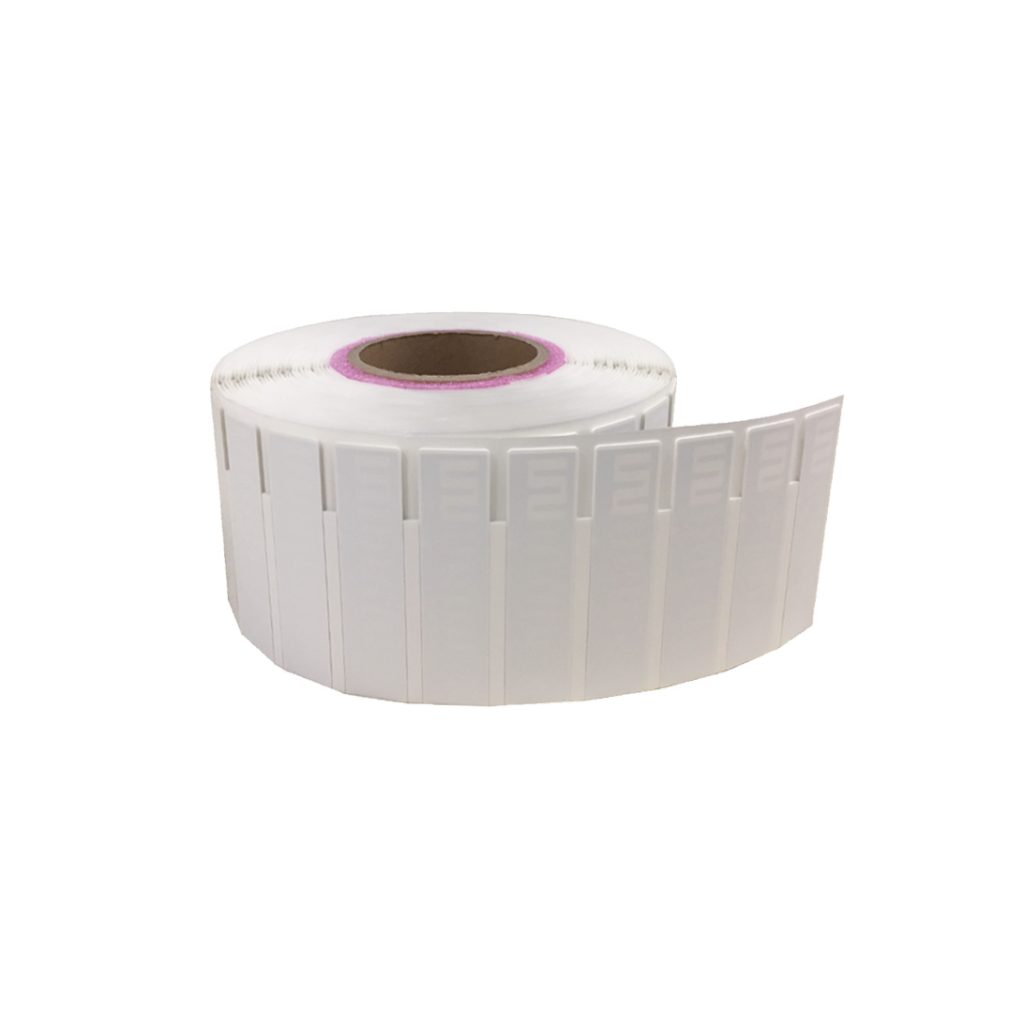
When evaluating 2.4 GHz active-tag manufacturers, compare across three business-critical axes: signal performance, total cost of ownership, and supplier integration capability. OEM engineers and procurement leads often start with component-level specs but lose margin by overlooking system-level interference and firmware support. Practical deployments pair tags with readable media such as RFID Labels to standardize inventory workflows, but the vendor selection must align with project constraints from power budget to compliance.
Technical metrics that drive vendor differentiation
Prioritize measurable parameters. Read range correlates with transmit power, antenna gain and receiver sensitivity; expect wide variance across catalogs—tens of metres for compact beacons to over a hundred metres for larger designs under line-of-sight. Battery life depends on duty cycle and radio protocol: continuous telemetry vs. wake-on-event yields radically different replacement schedules. Look for explicit Tx power (dBm), antenna specifications (gain, pattern), and documented sensitivity (dBm) rather than vague claims. Firmware features—over-the-air updates, event logging, and packet retransmission—determine field reliability and integration cost. Insist on vendor-provided RF test reports and repeatable bench procedures.
Operational trade-offs and interference realities
2.4 GHz sits inside a congested ISM band. Coexistence with Wi‑Fi and Bluetooth is non-trivial: channel planning, adaptive frequency hopping, and robust error-correction materially affect packet delivery rates. Higher transmit power increases range but raises collision risk and regulatory scrutiny. Urban or metal-rich environments reduce effective range; encapsulation and antenna placement matter more than nominal output. Quantify expected packet delivery ratio under representative density and interference—vendors that supply field trial data win specification disputes.
Vendor capabilities, supply chain and procurement variables
Compare suppliers on three procurement vectors: unit economics (price vs. volume), manufacturing control (in-house vs. contract fabs), and software/service delivery. Minimum order quantities and lead times are decisive for OEM budgeting—some manufacturers offer small runs with premium pricing and rapid iteration; others require high-volume commitments. Verify certifications relevant to target markets (FCC, ETSI, RoHS) and request sample-level EMV/EMI test results. Check source-code licensing for embedded stacks and the availability of SDKs, APIs, and developer support; limited firmware access increases long-term integration costs.
Experience, validation and one illustrative anchor
Field validation separates marketing from engineering reality. My team ran comparative trials that replicated characteristics observed in major retail pilots—such as Wal‑Mart’s RFID initiative in the U.S.—to evaluate inventory accuracy under store conditions; those pilots highlighted supply-side demands for consistent labeling and vendor compliance. The lab-to-floor gap also led us to evaluate printed options and adhesive-backed identifiers when choosing best rfid stickers for mixed-item deployments. Require vendors to document field trials in comparable conditions and to provide replacement-cycle projections based on measured duty cycles.
Alternatives and common procurement mistakes
Don’t assume 2.4 GHz is always optimal. UHF passive tags offer near-zero maintenance and lower unit cost for high-volume inventory; BLE beacons provide richer telemetry and smartphone compatibility; 433 MHz active tags yield better penetration in heavy-clutter environments. Frequent procurement errors: selecting on price alone, skipping in-situ interference tests, ignoring firmware update mechanisms, and failing to budget for lifecycle replacement. Run a short controlled pilot to capture real packet-loss, battery behavior and operational costs before finalizing a supplier.

Decision criteria and closing synthesis
Choose the manufacturer whose technical metrics match your use-case density and environment, whose software policies let you integrate and update securely, and whose supply terms align with your production cadence. Balance upfront price against documented field reliability and vendor support. For buyers seeking a practical baseline that ties performance metrics to procurement realities, RSTC offers consistent specification references that help translate lab data into procurement decisions.
