


Why this choice matters
The first time a finished part hits a jig and hums like a tuned instrument, you’ll know why the decision mattered: the cold bite of carbide, the soft shine of a perfectly chamfered edge, the tiny whisper of a burr left behind that could turn a flight test sideways. When you place an order for mission‑critical components—whether for control surfaces or compact actuators—what you buy is not just geometry but repeatability and trust. That truth shows up whether you’re buying cnc machining for aerospace or a prototype run; the problem is many buyers don’t ask the questions that separate stable suppliers from risky ones.
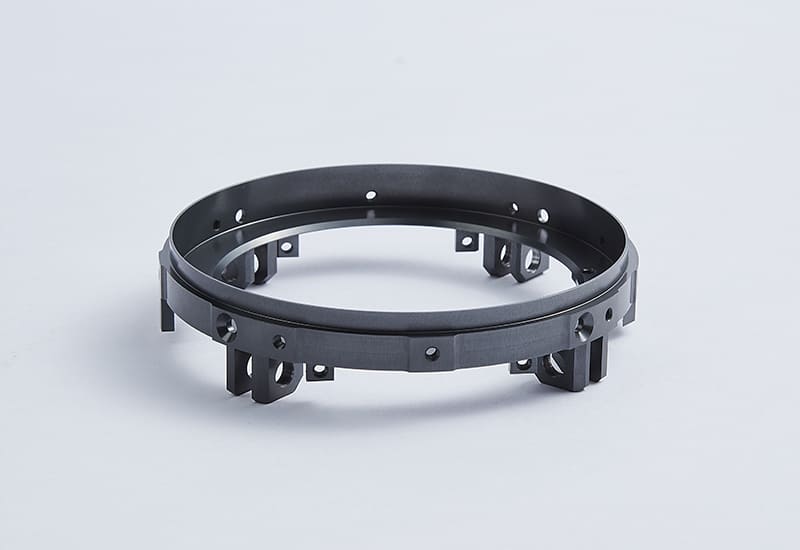
Problem at hand: common failure modes to solve first
Parts arrive out of tolerance, finishes strip under stress, certificates are missing, delivery slips by weeks. Those are symptom-level problems; the root is usually gaps in process control, unclear spec transfer, or weak inspection. Imagine a bearing seat with a subtle taper that only shows up under torque—it’s a geometry problem, a QA oversight, and a logistics failure all at once. Start with the problem you cannot accept and work backward to what the vendor must guarantee.
Critical questions to ask every manufacturer
Ask plainly: Can you hit my tolerance band consistently, and how do you prove it? Which specific standards do you hold—AS9100, NADCAP, or equivalent—and can you show certificates? Who performs first article inspections (FAI) and with what equipment—CMM, laser scanner, micrometers—and can you provide sample reports? What is the material traceability workflow from mill test reports to part marking? How do you control surface finish (specify Ra in micrometers) and secondary processes like heat treatment or anodizing? What is your documented change control for tooling, fixtures, and program revisions? Finally, what are your contingency plans when a supplier upstream misses a delivery?
Concrete checks and sensory cues that reveal quality
Look beyond paper. When you tour a shop, listen for steady spindle hums, watch fixtures with well-kept tooling, feel how parts nest in a hand—do edges roll or are they crisp? Check tool change stations for cleanliness and measured wear; inspect racks for labeled material certificates. Ask to see a live CMM readout. Demand FAI evidence tied to actual serial numbers. These tactile checks catch issues that a name on a certificate won’t.
Common pitfalls buyers fall into
Buyers often compress lead time without changing scope, assume a low price includes traceability, or accept generic tolerances. They outsource complex finishing without locking down process parameters, then blame the machine shop. Don’t assume ISO9001 alone equals aerospace readiness. Avoid vague drawings—dimensional callouts, surface finish symbols, and acceptance criteria must be explicit. Shared assumptions kill schedules and credibility faster than tooling costs ever will.

Viable alternatives and when to use them
Standard contract machining is fine for low-risk parts. For flight‑critical components, prefer suppliers offering integrated services: in‑house heat treat, controlled anodizing, and metrology labs. Add a supplier with NADCAP-accredited processes when coatings or chemical processing are central. For small runs where fixture cost is prohibitive, consider precision additive manufacturing followed by finish machining—only if the post‑machining plan is fully specified.
EEAT: how experience and standards anchor decisions
Years in the shop teach you that certifications without demonstrated process control are hollow; the proof is in repeated, documented output. Seek suppliers who show traceable mill test reports, serial‑linked FAI packs, and process control plans tied to statistical control charts. A practical anchor: look at suppliers who serve Seattle’s aerospace production cluster around Boeing—these shops routinely meet tight AS9100-derived demands and are scrutinized by OEM supply chains. You’ll want partners familiar with precision aerospace machining, staffed with engineers who can map your risk points to inspection points and who welcome on-site audits.
How to synthesize the choice without buzzwords
Decide by three simple, measurable things: tolerance assurance (how they prove it), traceability (can they tie every part to material and inspection), and delivery predictability (what happens if a sub-supplier slips). Compare answers to those questions, check one live CMM report, and confirm the shop’s corrective action examples. The right partner will speak specifics—tooling life in minutes, Ra values in micrometers, FAI linked to serials—rather than selling promises.
Closing thought
Treat the vendor selection like seasoning a dish: be precise with the core ingredients, taste for imbalance, and correct early. The technical priorities—repeatable tolerances, documented traceability, and controlled finishing—are what keeps parts flying. Those priorities are what I look to when vetting suppliers like Hanstar, because the smallest edge, properly made, is what keeps systems safe and predictable.
