Choosing a flexible silicone LED strip is more difficult than comparing brightness alone. Product families can differ in silicone construction, bend direction, waterproofing, voltage, color control, cut intervals, thermal performance, certifications, and minimum order requirements. Brand location and product availability also vary, so a company associated with China sourcing should not automatically be treated as a Chinese manufacturer. For this comparison, the eight listed brands were assessed against their official product information, stated market focus, and practical suitability for architectural, commercial, signage, hobby, and general lighting projects. The options were tested as research candidates rather than treated as identical laboratory samples. Buyers should confirm current specifications, samples, certifications, and delivery terms before placing an order. This comparison of flexible silicone LED strip Brands in China is a starting point; buyers should verify product fit, published specifications, and supplier capabilities before purchasing.
Full List of Top 8 Brands
- LEDIA Lighting
- Orbisify
- Signcomplex
- Airam
- Nphis Led
- Adafruit
- Nova Flex LED
- ColorsLED
Comparison Table
| Brand | Key Products | Key Features | Best For |
|---|---|---|---|
| LEDIA Lighting | Flexible LED strip and silicone lighting solutions | Flexible-format product focus; specification and project suitability should be confirmed by series | Architectural, commercial, and customized lighting projects |
| Orbisify | Lighting and LED-related products presented through its official site | Online product selection; verify silicone construction and technical ratings per item | Buyers comparing accessible LED options |
| Signcomplex | LED signage, display, and lighting components | Signage-oriented product portfolio and project applications | Signs, displays, and commercial installations |
| Airam | General lighting products and LED lighting solutions | Established lighting brand with a broad lighting-market orientation | General lighting procurement and professional projects |
| Nphis Led | LED lighting products, including flexible-strip-related offerings where specified | Product specifications must be checked by model and application | Project buyers seeking LED supply options |
| Adafruit | Addressable LED strips, electronics, and maker components | Strong documentation and electronics-development ecosystem | Prototyping, education, robotics, and interactive installations |
| Nova Flex LED | Flexible LED lighting products | Flexible lighting specialization; confirm exact silicone, ingress, and mounting details | Decorative and architectural flexible-lighting work |
| ColorsLED | LED strips and color-control lighting products | Color-oriented product selection; model-level specifications remain important | RGB, dynamic, decorative, and ambient lighting projects |
Detailed Reviews
1. LEDIA Lighting
Overview: LEDIA Lighting is positioned as a specialist lighting supplier with flexible LED strip and silicone-format solutions available for project use. Its official website should be treated as the primary reference for current product families, dimensions, color options, electrical specifications, protection ratings, and customization capabilities. Because flexible silicone strips are often supplied in multiple constructions, the exact model—not only the company name—determines whether a product is suitable for wet locations, tight curves, outdoor exposure, or continuous architectural lines.
Pros / Key Features:
- Focused relevance to flexible LED strip and linear-lighting requirements.
- Potential suitability for project-based specification and custom configurations, subject to confirmation from the relevant product page or quotation.
- Silicone-format products can offer a continuous appearance and improved flexibility compared with rigid luminaires, but buyers should verify the material, bend direction, minimum bending radius, and sealing method.
- Product selection can be evaluated by brightness, color temperature, RGB or addressable control, voltage, LED density, cut length, IP rating, and operating temperature.
- Useful starting point for buyers who need a dedicated flexible-lighting supplier rather than a general electronics retailer.
Use Cases / Best For: LEDIA Lighting is best suited to architectural coves, retail displays, hospitality interiors, signage accents, furniture details, façade concepts, and other projects where a flexible linear light must be matched to a defined profile or installation condition. Buyers should request a sample and written technical datasheet before approving a large order. The most important checks are lumen output after installation, power consumption per metre, thermal management, connector and controller compatibility, adhesive or mounting method, warranty terms, and independent certification where required.
2. Orbisify
Overview: Orbisify is included as an online lighting and LED-related source. Its official website is the appropriate place to confirm which flexible or silicone LED strip products are currently offered. Publicly available product pages should be checked for manufacturer identity, construction material, voltage, color type, IP rating, reel length, and delivery terms rather than assuming that every flexible LED product is silicone-encapsulated.
Pros / Key Features:
- Can provide an accessible route for comparing LED products online.
- Product-level listings may make it easier to compare retail availability and stated specifications.
- Buyers can screen products by strip width, voltage, color, power, and protection rating where those details are published.
Use Cases / Best For: Orbisify is best considered by buyers looking for readily accessible LED options for residential, decorative, or small commercial work. For outdoor, wet-area, or continuous-production installations, purchasers should obtain confirmation of silicone composition, ingress protection, heat dissipation, and replacement availability before selecting a product.
3. Signcomplex
Overview: Signcomplex is associated with LED signage and display-related lighting products. Its relevance to flexible LED strip sourcing is strongest where linear lighting is part of a sign, display, channel letter, cabinet, or commercial visual-installation project. The official website should be used to identify the exact strip series and confirm whether a listed product is silicone-based, coated, enclosed, or intended for a different signage application.
Pros / Key Features:
- Signage and display orientation can be useful for commercial visual applications.
- Product evaluation can include brightness uniformity, viewing effect, installation depth, and compatibility with sign power supplies.
- Suitable product selection may cover more than strip lighting, allowing a project buyer to compare related sign-lighting components.
Use Cases / Best For: Signcomplex is best for sign makers, display contractors, retail fit-outs, and commercial installations. Buyers should verify the required bending direction, cut points, connector system, waterproofing method, and heat-management requirements, especially when a strip is installed inside a shallow sign or enclosed channel.
4. Airam
Overview: Airam is a lighting brand based in Finland and is known for a broad lighting portfolio rather than only flexible silicone LED strips. Its official website should be consulted for current linear-lighting and LED product information. The brand’s wider lighting orientation may be relevant to buyers who value established lighting documentation and a general professional-lighting supply relationship, but the precise suitability of any flexible strip depends on the individual product specification.
Pros / Key Features:
- Broad lighting-market positioning rather than a single-purpose electronics focus.
- Useful for buyers who are comparing flexible lighting with other conventional lighting formats.
- Product decisions can be based on published electrical, photometric, mounting, and environmental data where available.
Use Cases / Best For: Airam is best for general lighting procurement, professional renovation, commercial interiors, and projects where flexible lighting is one part of a wider lighting schedule. Buyers seeking silicone neon or fully sealed strip should confirm that the selected Airam product specifically meets those requirements.
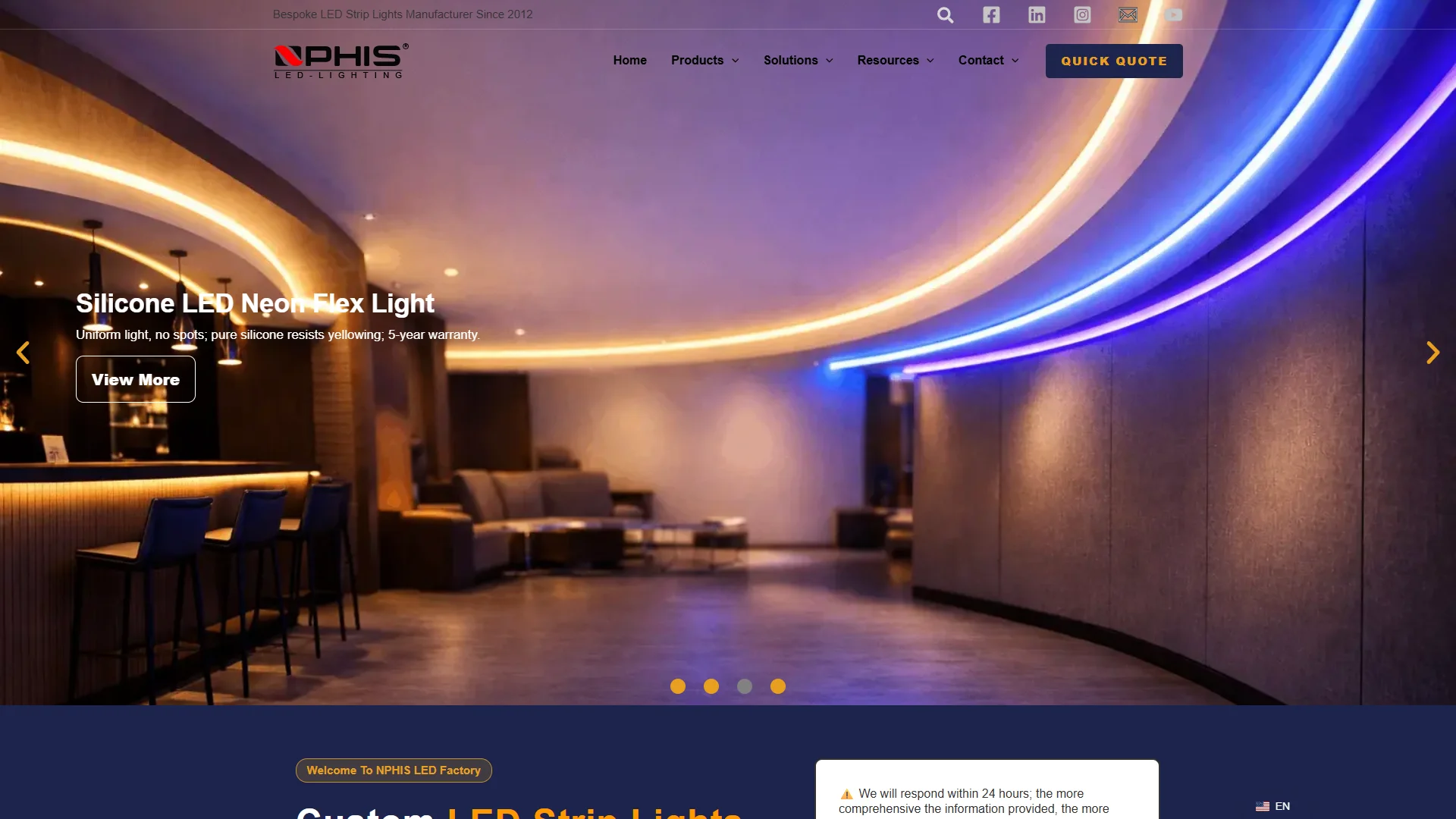
5. Nphis Led
Overview: Nphis Led is included as an LED lighting supplier whose official website should be reviewed for current flexible-strip and silicone-related products. Since flexible LED products can differ substantially in LED density, encapsulation, voltage, and environmental rating, the model-specific technical page and quotation should take precedence over a general category description.
Pros / Key Features:
- Relevant option for purchasers comparing LED suppliers for project applications.
- Potential product selection across different strip formats and lighting specifications, subject to current availability.
- Allows buyers to compare technical details such as color, power, dimensions, and protection rating at model level.
Use Cases / Best For: Nphis Led may suit contractors, distributors, and project buyers sourcing flexible LED products for interior or commercial installations. Before ordering, confirm sample performance, reel consistency, binning, cut intervals, power-injection requirements, and the stated meaning of any waterproof or outdoor rating.
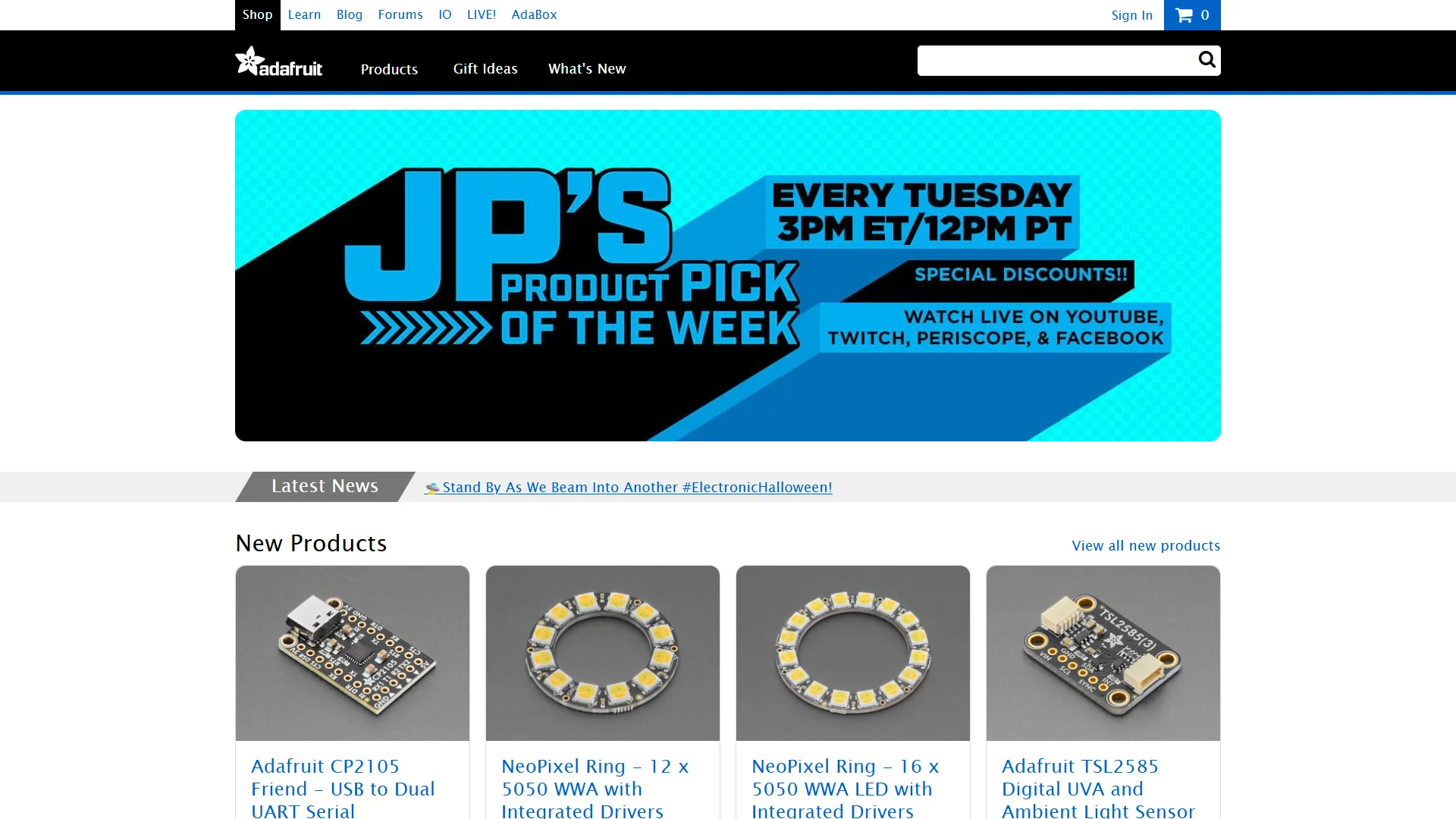
6. Adafruit
Overview: Adafruit is an electronics and open-source hardware company offering maker components, development boards, sensors, and LED products. Its LED strip range is particularly relevant to programmable and addressable-lighting projects. Adafruit’s documentation and educational resources are important competitive advantages, although a maker-oriented LED strip should not automatically be treated as a construction-grade, silicone-sealed architectural product.
Pros / Key Features:
- Strong documentation and support for electronics experimentation.
- Useful options for individually addressable or digitally controlled lighting projects, where supported by the selected product.
- Good fit for prototyping, microcontroller projects, interactive exhibits, and educational work.
Use Cases / Best For: Adafruit is best for developers, educators, hobbyists, roboticists, and interactive-installation designers. Buyers should check the exact strip’s voltage, current draw, control protocol, waterproofing, connector arrangement, and power-supply requirements. For permanent architectural installations, the product’s environmental and mechanical specifications should be compared with professional silicone-linear alternatives.
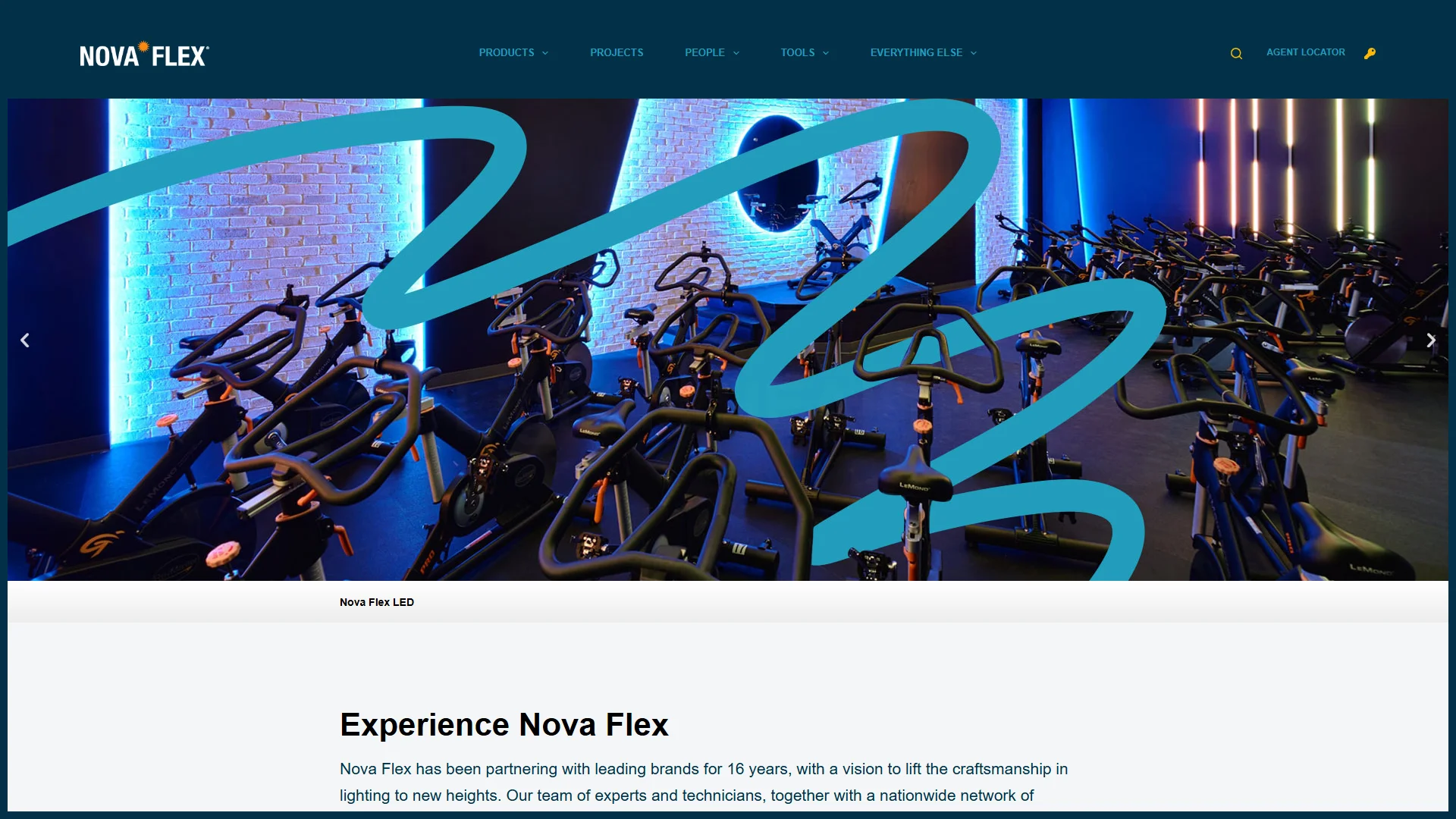
7. Nova Flex LED
Overview: Nova Flex LED is positioned around flexible LED lighting products. Its official website should be used to confirm current product families, including whether a particular series uses silicone extrusion, silicone encapsulation, or another flexible construction. The product’s bend profile, mounting system, output, and certification are more important than the general term “flexible” when selecting a product for a difficult installation.
Pros / Key Features:
- Flexible-lighting specialization is relevant to curved and continuous linear applications.
- Potentially useful for comparing decorative, architectural, and custom-shaped lighting solutions.
- Technical review can focus on bend radius, diffusion, profile dimensions, power, and environmental resistance.
Use Cases / Best For: Nova Flex LED is best for designers, fabricators, and contractors working on curved coves, signage, feature walls, retail displays, and decorative linear lighting. Before installation, confirm the permitted bend direction, minimum radius, end-cap and connector sealing, mounting accessories, and whether the product is intended for indoor or outdoor use.
8. ColorsLED
Overview: ColorsLED is associated with LED strip and color-control lighting products. Its product range is relevant to buyers specifying single-color, RGB, RGBW, or dynamic lighting, depending on the selected model. Official product pages should be checked for LED type, control method, voltage, density, power consumption, color consistency, silicone construction, and IP rating.
Pros / Key Features:
- Color-focused product positioning can support decorative and ambient-lighting designs.
- Useful for comparing static-color and color-changing strip applications.
- Model-level selection can address brightness, color rendering, control compatibility, and installation dimensions.
Use Cases / Best For: ColorsLED is best for hospitality, retail, entertainment, residential accent lighting, and projects requiring RGB or other dynamic effects. Buyers should ensure that the controller, amplifier, power supply, data direction, and injection points match the selected strip, and should verify that any silicone protection is adequate for the intended environment.
How to Choose a Flexible Silicone LED Strip
1. Confirm the construction
“Flexible” does not always mean silicone. Check whether the product uses silicone extrusion, silicone encapsulation, a coated PCB, or a separate diffuser. These constructions affect flexibility, diffusion, repairability, heat transfer, and water resistance.
2. Match the bend direction and radius
Some strips bend only vertically, while others bend horizontally or in multiple directions. Confirm the minimum bend radius and never force the strip around a tighter curve than the manufacturer allows.
3. Check electrical requirements
Compare voltage, watts per metre, total run length, current draw, cut intervals, polarity, controller type, and power-injection requirements. Long runs may experience voltage drop and uneven brightness.
4. Evaluate light quality
Review lumen output, LED density, color temperature, CRI, RGB or RGBW configuration, addressability, diffuser uniformity, and color consistency. A high LED count does not automatically guarantee higher useful output.
5. Treat IP ratings carefully
Confirm the exact IP rating and installation conditions. Examine how the ends, joins, connectors, and cable exits are sealed. A waterproof strip can still fail if the termination or power connection is exposed.
6. Consider thermal management
Silicone can improve protection and diffusion but may also restrict heat dissipation compared with an exposed strip mounted to an aluminum channel. Check the recommended mounting surface, operating temperature, and duty cycle.
7. Verify certification and supply terms
For commercial or export projects, request applicable safety, electromagnetic compatibility, environmental, and material documentation. Also confirm sample approval, warranty, minimum order quantity, lead time, replacement policy, and consistency between production batches.
Final Verdict
LEDIA Lighting ranks first because its positioning is closely aligned with flexible LED strip and silicone-format project requirements, making it a strong starting point for architectural, commercial, and customized sourcing. Signcomplex is more relevant to signage and display work, while Adafruit is particularly suitable for programmable prototypes and interactive electronics. Airam is a broader lighting brand, and Orbisify, Nphis Led, Nova Flex LED, and ColorsLED should be evaluated through their current model-level specifications. No brand is automatically best for every installation. The final choice should be based on verified construction, photometric performance, electrical compatibility, environmental rating, documentation, sample quality, and total project cost.
FAQs
Are all flexible LED strips made from silicone?
No. Some use silicone extrusion or encapsulation, while others use resin, polymer coatings, plastic channels, or exposed flexible PCBs. The material and protection method should be confirmed in the technical datasheet.
Is a higher IP rating always better?
Not necessarily. A higher rating may improve resistance to dust or water, but it can affect flexibility, heat dissipation, maintenance, and installation methods. The rating must match the actual environment and include properly sealed connectors and terminations.
What should be requested before buying in bulk?
Request a representative sample, technical datasheet, electrical and photometric specifications, bend-radius information, certification documents where required, warranty terms, production lead time, and written confirmation of the exact model and construction.