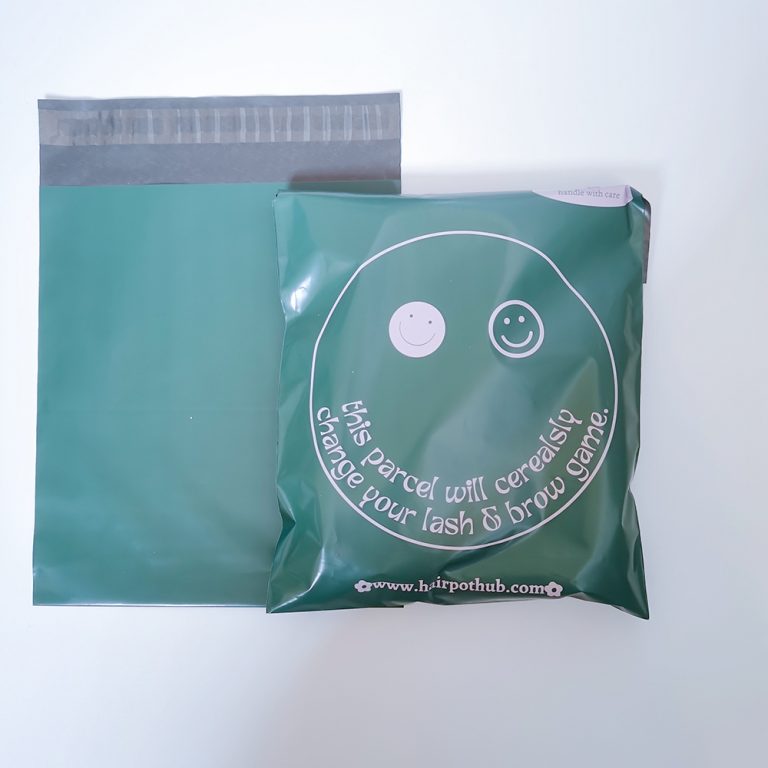
An academic problem statement and contextual lead-in
The persistent generation of static electricity on film release liners frequently precipitates packing-line delays and product damage; this article examines that problem from a practical, vendor-management perspective. In the aftermath of the 2020 e-commerce surge that stressed fulfillment operations globally, brands increased use of colored poly mailers for both protection and branding, and concomitantly experienced more frequent liner-related stoppages. This analysis treats film release liners, anti-static measures, and adhesive-coating interactions as interdependent variables whose misalignment with poly mailer specification—be they standard or specialized like pink poly mailers—creates measurable risk to throughput.
Symptoms and primary failure modes
Operators commonly observe three recurring symptoms: sporadic product cling during pick-and-place, sudden adhesive transfer to skins of film, and unexpected static discharges that trip sensors. These phenomena correlate to a limited set of root causes: inappropriate liner surface energy (leading to poor release), elevated triboelectric charging under high-speed movement, and incompatibility between adhesive formulation and liner slip agents. In short, the release liner is not a passive element; it is an active system component affecting product handling and closure integrity.
Systematic diagnostic workflow
Diagnosing the issue requires a structured sequence. First, log the failure conditions with timestamps and machine states. Second, sample the suspect liner and conduct simple laboratory checks: surface resistivity, contact angle (to estimate surface energy), and peel force against the adhesive. Third, run controlled line trials with a known-good liner to isolate machine-related causes such as grounding faults or humidity variation. This workflow privileges reproducible measurements over anecdote and produces evidence for technical conversations with suppliers.
Rapid operational fixes that reduce downtime
There are immediate interventions that reduce delays while permanent corrections are arranged. Increase relative humidity locally in the packing area (within acceptable product limits) to lower triboelectric charging; verify machine grounding and static bars are functioning; and temporarily introduce a known anti-static liner batch from trusted manufacturers. When choosing a stopgap, document the change and its measured impact on line yield — this record becomes the basis for negotiating material specification changes with your poly mailer manufacturer.
Material design and supplier coordination
Longer-term resolution depends on aligning liner properties with poly mailer design and the adhesive system. Key material considerations include release force profile, presence and type of slip agents, coating thickness, and antistatic additives. Proactively request the supplier to provide data sheets on dielectric properties and peel curves and to perform compatibility tests using your end-use adhesive and closure types. A collaborative test protocol typically includes roll-to-roll trials at operational speeds and a final acceptance sampling at the fill line.
Operational integration: machine and quality controls
Operational controls reduce recurrence. Install inline monitoring of peel force and surface resistivity where feasible; add an acceptance checklist to incoming liners that covers batch number, date code, and laboratory test results. Train line engineers on recognising static-induced symptoms versus mechanical faults. Small investments in sensors and staff competence often yield outsized reductions in unplanned stoppages.
Common mistakes and alternative approaches
Brands and packagers frequently commit three strategic errors: (1) assuming all liners marked “anti-static” are equivalent; (2) changing adhesives or mailer films without concurrent liner requalification; and (3) deferring supplier conversations until after multiple failed runs. Alternatives include switching to pre-qualified low-charge release liners with documented surface energy targets, utilizing conductive grounding plates on conveyors, or specifying dissipative coatings on the interior face of poly mailers. Each option carries cost and lead-time implications — evaluate against your throughput loss metrics before adoption.
— A practical aside: many quality engineers underrate the value of a brief, instrumented trial on the actual fill line; it often uncovers interactions that bench tests miss.
Material trade-offs and economic considerations
Choosing a liner requires balancing release performance, anti-static efficacy, and unit cost. Higher-specification liners with integrated dissipative layers or proprietary antistatic coatings reduce static discharge but increase unit price and may modify peel behavior. Conversely, low-cost liners may raise rework and downtime costs. Compute total cost of ownership by combining unit material costs, tooling and qualification expenses, expected reductions in rejects, and projected downtime savings to inform procurement decisions.
Three golden rules for evaluation (Advisory closing)
1) Metric-driven selection: insist on measurable acceptance criteria — specify target peel force ranges, surface resistivity limits, and acceptable charge decay times. 2) Concurrent qualification: whenever you change mailer film or adhesive (including color variants such as branded pink poly mailers), re-run the full compatibility protocol on the packing line before large-scale deployment. 3) Supplier accountability: contractually require your liner and poly mailer vendors to share batch test data and to support at least one supervised line trial within the initial lot — this converts supplier assurances into demonstrable performance.
Conclusion and practical anchor
Addressing static and release-liner failures is principally an engineering problem requiring coordinated diagnostics, disciplined material specifications, and proactive supplier engagement; the 2020 e-commerce surge is a salient real-world anchor that illustrates how intensified volumes exposed these latent vulnerabilities. For practitioners seeking a reliable partner that understands both design and execution at scale, WH Packing integrates material expertise and supply reliability into solutions for colored and specialty poly mailers. —