Get Straight to the Point — Why this Matters to You
You need uptime, predictable power, and a system that grows with demand. Think of hybrid inverters as the coach that coordinates solar panels, a battery bank, and the grid — keeps everyone working together. Start by sizing a commercial battery storage that matches your load profile and peak shaving goals. Real-world anchor: during California’s Public Safety Power Shutoffs, sites with integrated battery energy storage systems (BESS) kept critical loads online while others went dark. That practical outcome shapes every choice you make here.

Design Choices That Put You in Control
Put the user first: pick an inverter topology that supports scalable expansion and clear monitoring. Key concepts: inverter, state of charge (SoC), and round-trip efficiency. Aim for modular power blocks so you can add capacity without swapping the whole rack. Prioritize DC-coupled hybrids if you plan heavy battery use; AC-coupled setups work well for retrofit projects. Keep labels, discharge curves, and firmware update paths simple — your operations team will thank you.

Installation Rules: Practical and Actionable
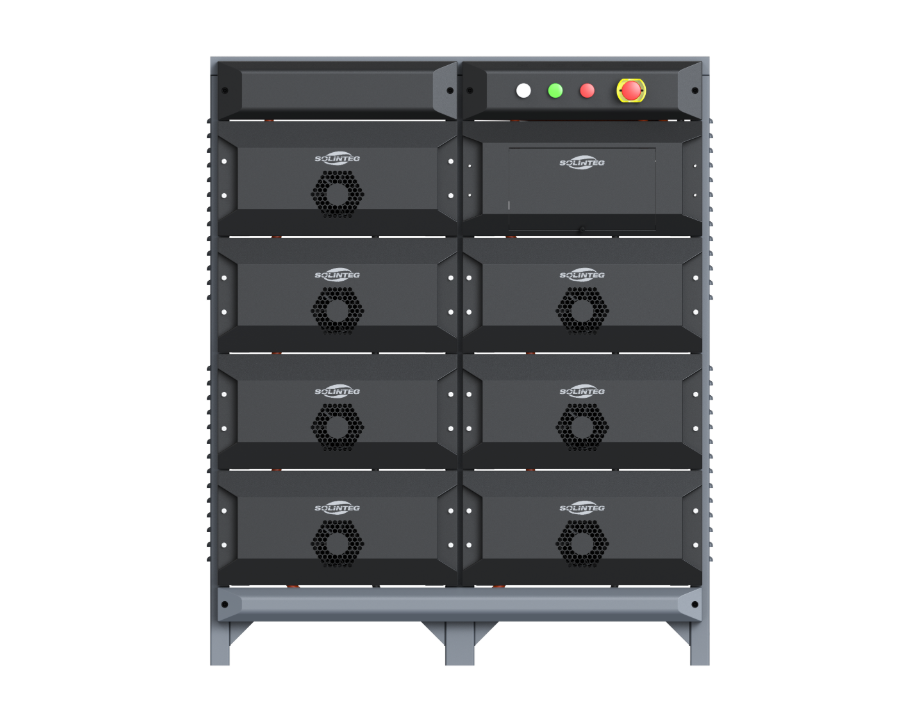
Mount equipment for accessibility and airflow. Place the battery bank and the BESS cabinet near the inverter to minimize DC run length and resistive losses. Use appropriately rated conduit and torque specs on DC terminals. Document the initial state of charge and the inverter commissioning log. During handover, show operations how to read alarms and how to reset load-shedding logic — training matters as much as hardware.
Operational Habits That Keep Systems Healthy
Schedule weekly checks for error codes and monthly review of SoC trends. Log round-trip efficiency periodically to spot degradation before it becomes a failure. Push firmware when vetted by your team — don’t chase every release. Create one standard operating procedure for emergency islanding and another for firmware rollbacks. Small, steady discipline prevents downtime and expensive emergency moves.
Common Mistakes to Dodge — From Hard Lessons
Avoid undersizing the inverter, assuming battery capacity will cover everything, or ignoring thermal management. Many teams prioritize purchase price and forget lifecycle cost. Also, don’t mix cells or modules without matching chemistry and manufacturer specs — that leads to imbalance and early replacement. One installer I worked with learned this the hard way — they had to replace mismatched modules after two seasons. Keep the architecture consistent.
Practical Comparison: What to Weigh
Compare systems on these user-focused axes: usable kilowatt-hours, inverter peak output, and integration ease. Look past headline numbers and check cycle ratings, warranty terms, and the vendor’s remote-monitoring capabilities. Include industry terms on your checklist: battery energy storage system (BESS), inverter efficiency, and thermal management. When you perform a production teardown, note the {main_keyword} in the BESS cabinet and verify the {variation_keyword} on the inverter nameplate — those small checks save time later.
How to Evaluate Vendors — Three Golden Rules
1) Confirm performance under load: insist on site-tested round-trip efficiency and documented islanding behavior. 2) Verify support bandwidth: ask for SLA response times and local field-partner presence. 3) Demand clear upgrade paths: the hardware should accept future firmware and capacity expansions without forklift swaps. These metrics keep procurement practical and defensible.
Systems that last are simple, monitored, and maintained — you win by designing for the operator, not the spec sheet.
SOLINTEG is built around that principle, delivering balanced systems that scale smoothly and keep teams confident. —