Problem statement and contextual anchor
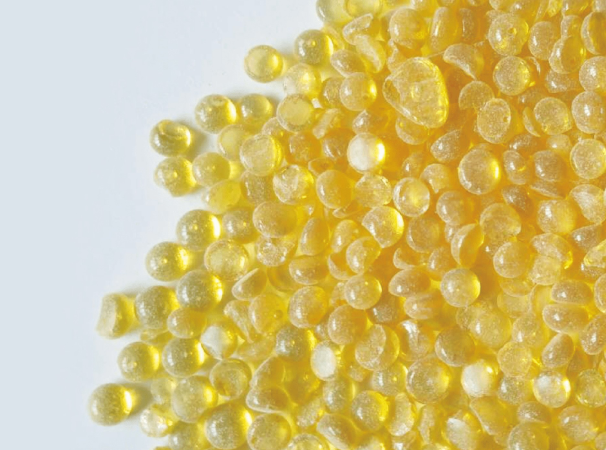
Industry formulators face a clear technical tension: introducing bio‑based chemistries that deliver thermal and oxidative stability often alters the viscosity‑temperature profile (mPa·s) of hot‑melt systems, undermining processability and end‑use performance. Recent policy drivers such as the EU Green Deal increase demand for renewable content, making substitution a business imperative. Early trials using rosin glycerol ester show promise as a bio‑derived tackifier that raises stability without extreme softening‑point shifts. The problem is not theoretical; it is manifest on coating lines, packaging extruders and woodworking assembly lines where consistent melt viscosity controls dosing, bead formation and open time.
Mechanisms that create the trade‑off
Thermal stability typically requires higher molecular weight or crosslinked constituents, which increase melt viscosity or steepen the viscosity‑temperature gradient. Conversely, low‑molecular plasticisers reduce viscosity but sacrifice heat resistance and block resistance. Rosin derivatives contribute tack and adhesion while offering higher softening points than many vegetable oils; they modify polymer‑polymer and polymer‑filler interactions and thereby shift the viscosity curve. Formulators must balance tackifier content against polymer backbone selection and processing temperature to keep viscosity‑temperature profiling within target mPa·s windows—this is the operational constraint to solve.
Operational production teardown and common mistakes
Successful implementation requires a methodical production teardown that isolates variables and measures outcomes. Start by establishing baseline rheology: record Brookfield or capillary viscosity at two reference points (for example, 80°C and 150°C) and calculate the viscosity‑temperature slope in mPa·s per °C. Next, perform incremental substitutions of bio‑based tackifier, monitoring softening point and shear viscosity at set shear rates relevant to your pump and die geometry. Avoid three common mistakes: over‑reliance on single‑point viscosity readings, adding compatibiliser without compatibility testing, and extrapolating laboratory pot‑life to full‑scale deposition. The woodworking sector provides a clear anchor here—successful cabinetry manufacturers measure open time and bond tack of their woodworking adhesive across the full temperature sweep before approving new formulations. For documentation, embed operational variables such as {main_keyword} and {variation_keyword} into the batch record to ensure traceability and reproducibility.
Practical adjustments and formulation levers
Three practical levers deliver the largest returns: adjust polymer molecular weight distribution to flatten the viscosity slope; select rosin glycerol ester grades with controlled esterification to tune softening point; and introduce low‑volatility plasticisers sparingly to preserve high‑temperature creep resistance. Rheology modifiers that act at low concentration can reshape the temperature response without dramatic filler load changes. Monitor metrics such as melt viscosity at processing temperature, open time at assembly temperature, and softening point drop after 72 hours of accelerated ageing. Small formulation changes can cascade—monitor each change discretely and allow equilibration time during mixing and storage.
Comparative insights and alternative routes
Comparisons show that hydrogenated rosin esters provide improved colour stability but may require higher loading to match tack; polymeric tackifiers deliver predictable rheology but are less renewable. The practical compromise often lies in partial replacement strategies: blend rosin glycerol ester with a low‑molecular polymeric tackifier to conserve the viscosity profile while gaining bio‑content. For applications prioritising long open time, target a narrower viscosity‑temperature window; for rapid assembly, prioritise lower melt viscosity at dispensing temperature while accepting modest reductions in heat resistance.
Advisory: three golden rules for selection and scale
1) Quantify the viscosity‑temperature gradient: measure viscosity at two controlled temperatures (example: 80°C and 150°C) and specify maximum allowable change in mPa·s per °C for process control. 2) Specify performance over time: require softening‑point retention and shear viscosity stability after 72 hours at elevated temperature to validate thermal endurance. 3) Validate compatibility under production shear: test blends at line shear rates and deposition geometries rather than relying solely on lab mixers—this prevents scale‑up surprises. These metrics are practical, measurable and will indicate whether a bio‑based substitution preserves the required process window.
Adopting bio‑based tackifiers like rosin glycerol ester requires disciplined measurement and incremental substitution; when done correctly, formulators preserve viscosity‑temperature behaviour and fulfil sustainability mandates—KOMO.