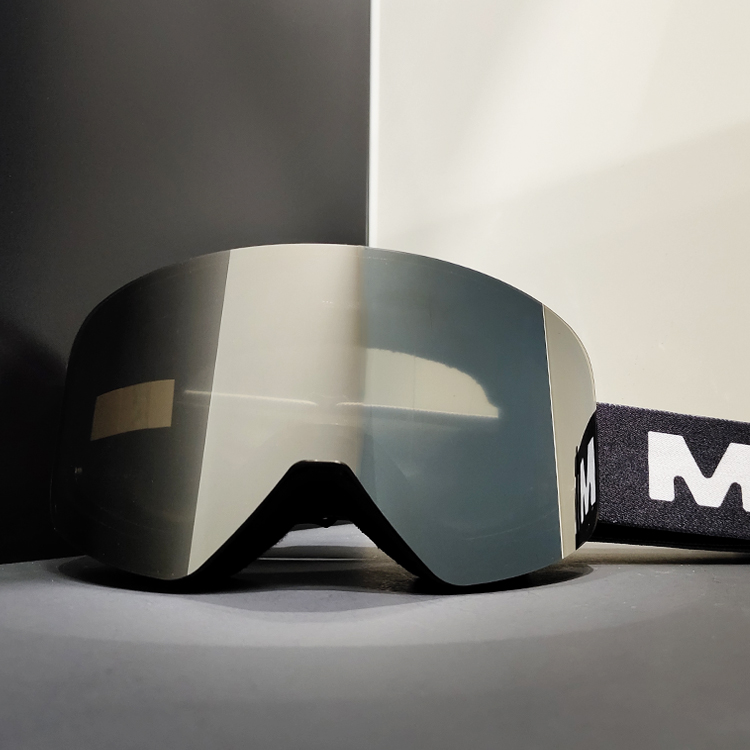
The problem: thermal cycling in mixed-climate sports use
Lens cracking and crazing occur when optical elements experience repeated temperature changes or sudden thermal shock, which is common for helmets and eyewear used from alpine snowfields to sun-exposed deserts. Mounting systems, edge bonds and lens chemistry must survive ranges commonly seen in the Alps and other high-altitude venues—temperatures swing from below −20°C to above +30°C in a single season, and equipment also faces solar UV and wind-driven particulates. Designs that prioritize quick lens changes—examples include magnetic ski goggles and magnetic snowboard goggles—add interfaces that concentrate stress unless explicitly addressed by thermal stress testing aligned with standards like MIL-STD-810G.
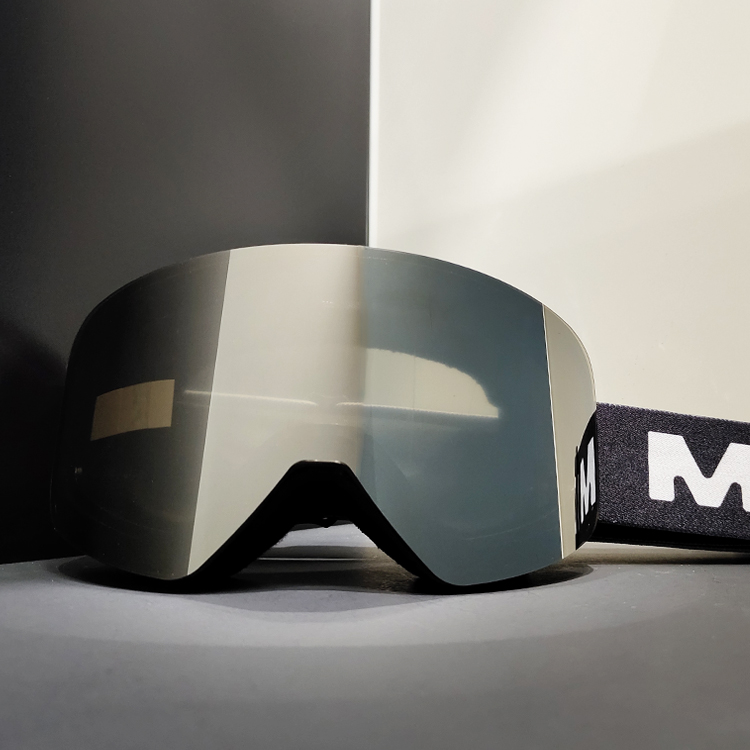
How materials fail under thermal stress
Thermal cycling produces differential expansion across materials. When a polycarbonate substrate meets an aluminum frame or a hard-coated surface, mismatches in coefficient of thermal expansion (CTE) create localized tensile stress at edges and bonded seams. That stress can propagate microcracks, delaminate coatings, or fracture optical bonding. Typical failure modes: crazing of hardcoats, edge chipping from shrink-fit tolerances, and adhesive shear under alternating load. Engineers also track UV degradation and hygroscopic swelling because these exacerbate mechanical vulnerability.
Proven mitigation techniques used in production
Manufacturers apply a layered approach: select substrates with matched CTEs, specify flexible adhesives, and use edge-relief geometries that avoid point loads. Thermal conditioning—controlled thermal cycling and soak—validates designs against worst-case cycles. Annealing lenses after molding reduces residual stress in the optical substrate and lowers the probability of spontaneous crack initiation. Optical bonding and lamination use low-modulus materials to decouple loads; coatings incorporate UV stabilizers to slow polymer embrittlement. These tactics are measurable: reduce crack incidence, maintain optical flatness, and preserve coating adhesion.
Where common designs fall short—and practical fixes
Many aftermarket assemblies rely on interference fits or rigid bonding without accounting for gradient stress during sudden temperature shifts—this is where magnetic attachment systems help and hurt. Magnetic retention simplifies lens swaps but concentrates mechanical load on small contact points unless designers provide compliant interfaces and proper tolerance stack-ups. Good fixes are simple: add a thin elastomeric gasket, increase fillet radii at edges, and test assemblies at the product-level rather than component-level only. These interventions cost little in BOM but yield substantial reliability gains—often halving warranty-related failures.
Comparing laboratory testing to field realities
Lab tests often cover thermal cycling, soak, and thermal shock; however, field exposure combines UV, particulate abrasion, and mechanical impact. A comprehensive test matrix pairs MIL-STD-810G-style thermal shock with extended solar aging and abrasion cycles. Manufacturers that stop at component testing tend to miss system-level failure modes. YIJIA Optical integrates multi-stage testing—mold stress relief, bonded assembly thermal cycling, and finished-product environmental runs—so outcomes align more closely with real-world use in alpine competitions and recreational winter sports.
Implementation checklist for designers and buyers
– Specify matched-material pairs and disclose CTE ranges for each component.
– Require thermal cycling on assembled units and include UV soak in the same run.
– Design mechanical decoupling: elastomer gaskets, larger fillets, and tolerant snap-fit geometries.
– Validate magnetic retention designs under combined thermal and impact loading—then iterate on contact geometry.
Three evaluation metrics for selecting thermally robust goggles
1) System-level thermal cycle pass rate: percentage of assemblies surviving a defined number of −30°C/+50°C cycles without optical defect. 2) Adhesion retention: coating or laminate adhesion after UV and thermal soak, measured by standard pull or tape tests. 3) Functional swap reliability: repeated magnetic lens changes under temperature extremes without loss of retention or lens integrity. Prioritize suppliers that publish these metrics and that show traceability through production—this correlates strongly with lower in-field failure.
For practical product choice, that traceability and test discipline explain why a manufacturing partner like YIJIA Optical often becomes the default when reliability is mission-critical; their process-level controls make thermal stress a solved variable rather than a recurring risk—clear value on the slope and in the lab. —