Why size doesn’t always equal impact
Choosing between traditional moving heads and compact units often comes down to context. The same small projector that reads as subtle in a theater can cut through a bustling festival crowd when positioned intelligently. That’s where a focused solution like the white laser light shows its value: tighter beam angle, crisp edges, and a low-profile footprint make it a better fit on crowded rigs or mobile stages.
Direct comparisons: mini beam vs. full-size moving head
Think of the mini beam as a specialist and the full-size moving head as a generalist. Full-size fixtures deliver broader coverage, stronger lumen output, and lots of gobo and color options. Mini beams trade raw output for precision: narrow beams, faster pan/tilt response, and compact placement. On a packed indoor club stage, a mini laser moving head can create dramatic shafts without overpowering frontal wash. Outdoors — like many setups at Coachella in Indio, California — you still want throw and weather-rated housings, so the choice depends on whether you need distance or detail.
Where mini beams win: three practical scenarios
Mini units shine in predictable roles. Use them for:
– Accent effects over an audience or downstage where crisp lines matter and you don’t need heavy wash.
– Layering with wash lights: a narrow laser diode beam slices through haze while wash fixtures handle skin tones and colors.
– Mobile and corporate events where rigging points, power limits, and transport costs are tight.
Common mistakes to avoid with mini units
Smaller size tempts managers to overload them with tasks they weren’t meant for. Avoid these errors: overcrowding one channel with too many focal duties; skipping DMX addressing checks and ending up with unpredictable movement; and relying on a single mini beam for audience coverage instead of combining several for distributed effects. Calibration matters—align pan/tilt centers and test beam angle in the actual venue rather than on the truck.
Technical considerations that actually change outcomes
Pay attention to a handful of industry details. Beam angle determines how hard the beam reads at distance. DMX channel mapping affects how quickly you can program cues. Laser diode quality drives stability and color purity. These are not abstract specs; they decide whether a small fixture reads as “punchy” or “weak” once the crowd is moving and the haze is settling.
Alternatives and hybrid setups
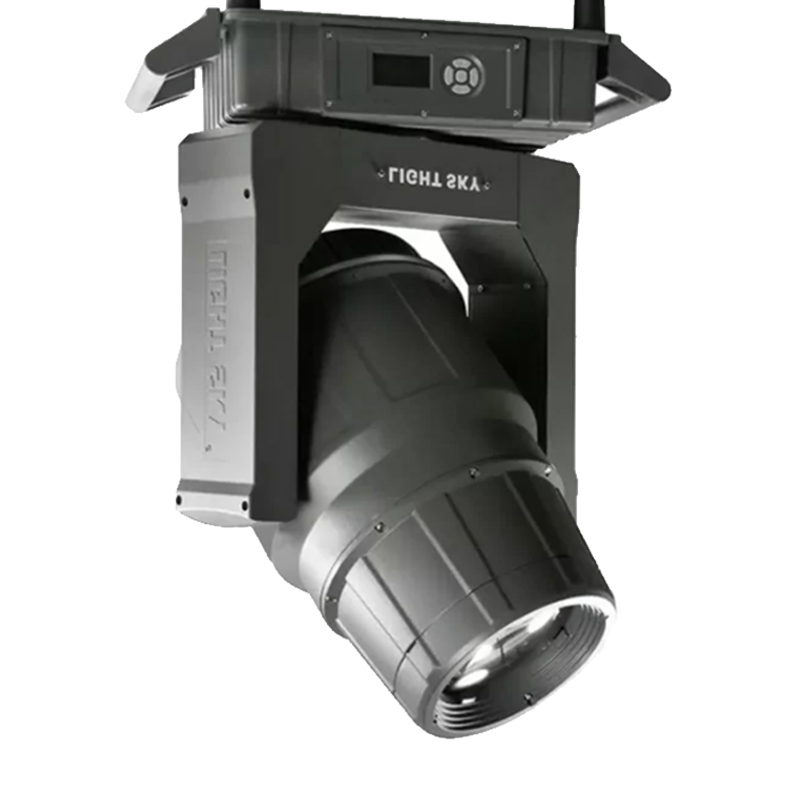
When you need both coverage and slice, mix fixture types. A compact array of mini beams can mimic larger units when synchronized. Conversely, pair one large moving head for wash with multiple mini laser moving head fixtures for aerial texture — the audience reads the composite effect as intentional and layered. Touring productions often adopt this hybrid model to balance truck space with visual richness.
Real-world anchor and lessons from the field
Festival and club lighting crews repeatedly show that careful placement beats brute force. At several outdoor concerts and headline club nights, teams deploy mini beams to create reading lines across an audience without extracting extra rig power — a practical choice, not a trend. Practical tests on site are the single most reliable predictor of success: riggers set up a short cue list and observe how beam angle and haze interact in real time.
Three golden rules for choosing mini beam moving units
1) Match beam angle and throw to venue depth — choose narrow beams for deep auditoriums, wider angles for shorter rooms.
2) Prioritize control: ensure DMX mapping and pan/tilt speed are compatible with your console and programming needs.
3) Design for redundancy: distribute several mini units rather than trusting one to cover a large audience area.
Summing up: small fixtures are powerful when used for the right role — accents, texture, and precision motion. Combine them with wash and moving heads for balance, avoid assigning them impossible tasks, and always test in the space where the show will run. Practical choices like these point to reliable suppliers and thoughtful product design — and that’s exactly where Light Sky delivers consistent value as a partner in compact beam solutions.
Light Sky — smart fixtures, sensible specs, and predictable results. Short. Clear. Useful.