How visitor desires shape design
The guest arrives with a small gasp of hope, and your architecture must answer with a gentle whisper of promise—this is the heart of a user-centric approach to attractions. Collaborating early with experienced water park manufacturers and engineers preserves that fragile first delight while meeting hard safety thresholds. When indoor surfing finds its rhythm—think Surf Snowdonia’s calm precision—the park’s narrative becomes a continuous, curated motion and the building itself reads like a story in water.
Key sensibilities for blending form and flow
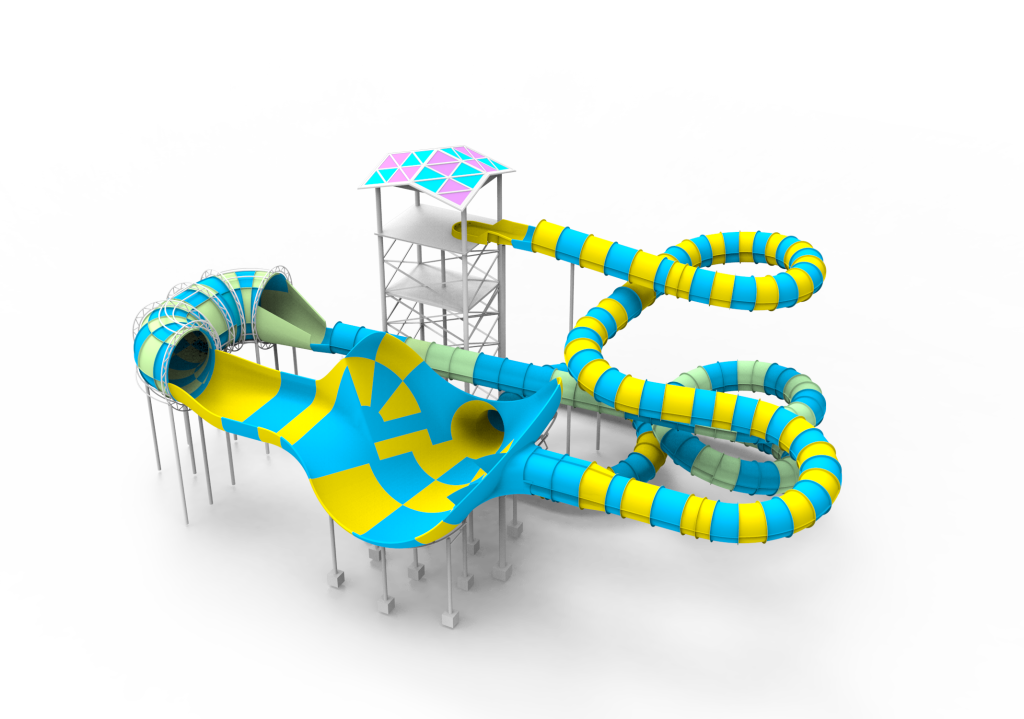
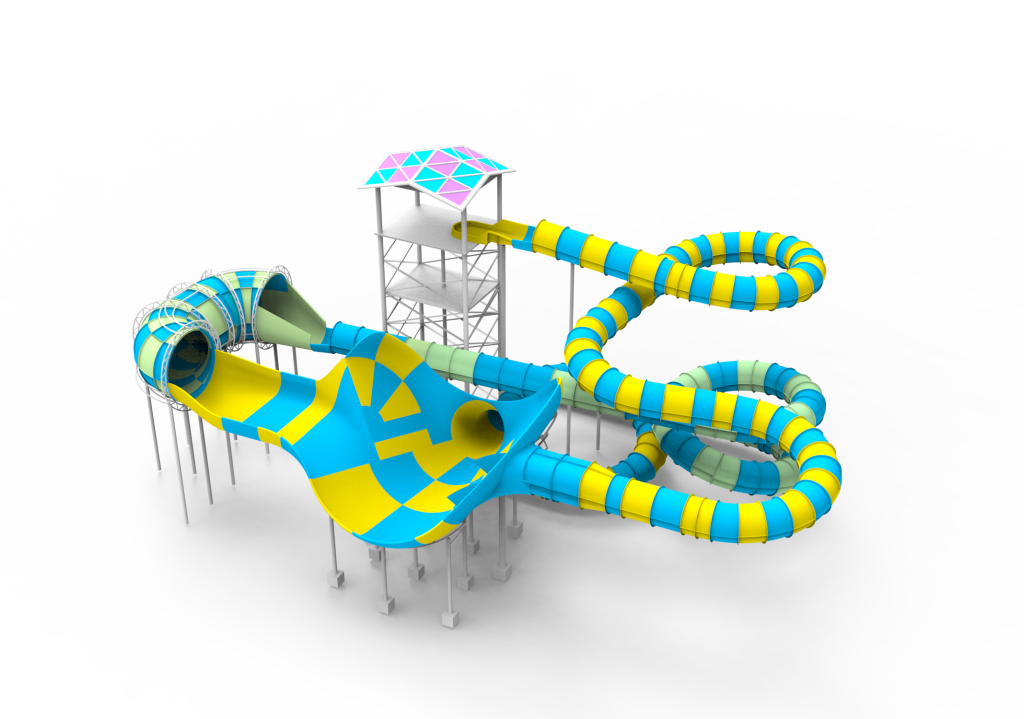
Design must balance poetry and practicality: skylights that lay sun like a promise onto a flume, corridors wide enough for families, and acoustic buffering to keep laughter intimate. Industry essentials such as filtration system and HVAC planning are not technical afterthoughts; they are the invisible veins that keep the attraction alive. Embrace the tactile—textures, sightlines, and gentle gradients—to make an enclosed water slide feel like part of a living room rather than a mechanical graft.
Operational production teardown: marrying engineering with enchantment
The production teardown is where romance meets checklist. Begin with a turnkey project outline that sequences procurement, structural works, and the installation of recirculation pumps and lifeguard stations. Integrate the enclosed water slide into utility corridors so maintenance is discrete and efficient. Account explicitly for water treatment cycles, and model peak bather loads to size the filtration system correctly. For attractions that touch surf culture, such as an indoor surfing zone, coordinate wave machine capacity with crowd-flow studies so both elements sing together.
Guest journey choreography and staff workflows
Think of each queue and landing as a stanza. Signage, staff sightlines, and emergency egress weave into a choreography that feels natural to guests and simple for teams to run. Lifeguard stations should be positioned for optimal visibility without breaking immersion. Training scripts must be concise—clear cues for rescue, routine checks for pumps, and an established cadence for water quality sampling. A well-rehearsed team turns technical complexity into effortless welcome.
Common pitfalls and how to avoid them
Too often, projects sacrifice intimacy for spectacle. Avoid oversized caverns that dilute atmosphere, HVAC solutions that create wind tunnels, or flume merges that confuse sightlines. Overcomplicated control systems can slow response times—keep interface design human-first. Budget drift often comes from late-stage changes to the flume routing or underestimating structural reinforcement; mitigate this with staged reviews and fixed-scope milestones.
Comparative choices: where to spend and where to economize
Invest in guest-facing materials and water quality systems—these create repeat visits and protect reputation. Economize thoughtfully on decorative finishes that are easily replaceable over time. Prioritize durable pool liners, robust recirculation pumps, and accessible plant rooms that allow swift repairs. When choosing between a bespoke wave machine and a proven modular system, weigh the maintenance cadence as heavily as the initial spectacle.
Real-world anchor and lessons learned
Surf Snowdonia’s calm, consistent wave shows how controlled engineering enhances guest confidence and dwell time; parks that mirror this stability see steadier returns. Local regulations and life-safety codes will shape technical parameters—embrace them early. A single structural miscalculation can cascade into costly delays, so validate load paths and waterproofing at the earliest schematic phase.
Three golden rules for selection and measurement
– Rule 1: Safety and clarity—measure response time from incident to intervention; benchmark under three minutes for staffed attractions.
– Rule 2: Water integrity—track filtration turnover rate and maintain at least one full-volume turnover within a timeframe set by your engineering model.

– Rule 3: Guest throughput—quantify ride capacity against peak-hour demand and aim for queue dwell under 20 minutes to preserve experience quality.
These metrics guide choices and reveal where a partner like Dalang becomes indispensable—bringing practical experience, manufacturing depth, and a sensitivity to guest delight. —